Art/Research International: A Transdisciplinary Journal
Volume 5 Issue 1, 2020
WITH (VIOLENT) LOVE: SEEING MENTAL IMAGES
GETTING LOST AND RESURFACE
Heike Langsdorf
KASK School of Arts Hogent
Ernst Maréchal
RITCS School of Arts
Heike Langsdorf
(1974) is an artist exploring the performative qualities of
choreographing and conditioning within and beyond the art-institutional field. Trained as
a dancer, she connects to artistic making, thinking and researching through a
continuous exploration of movement and choreographic principles. Currently she is
affiliated as teacher and artistic researcher to KASK school of arts Hogent. She
furthermore develops and presents works with radical_hope, a frame for co-creation
and advanced practicing.
Ernst Maréchal (1975) is a performer, director, musician and a visual / sound artist. He
searches for ways to express social themes in an artistic way, with (inter)action and
public space as a focus. In practicing ways of making art as a dialogical process he
involves himself in many co-creation projects and collaborated with community-art
places like Globe Aroma and Manoeuvre. Currently he started a phd trajectory (RITCS
school of arts / VUB) called Social Recordings where he brings literature, peoples’
voices and field recordings together in an ongoing audible process of playing and
recording.
With (Violent) Love
180
Art/Research International: A Transdisciplinary Journal
Volume 5 Issue 1, 2020
Abstract: Concepts fundamental to our (personal) systems of belief and behaviour are
crumbling and falling to dust — just because we truly exit our comfort zone. These lost
ideas then do transform and, after being newly informed, become as such unfamiliar but
promisingly altered concepts. In our correspondence we want to acknowledge the
following: that what is getting overwritten through communal and multi-perspective
experience is always more promising (not yet better!) than what vanished the moment
when it mismatched (our individual) ideas and lost its capacity of sense-making. Our
conversation is a plea for considering mental images as going through a process of
“getting born,” consolidating, dominating, corrupting and eventually losing any
(convincing) agency altogether. Such a consideration is never free of devastating
frustration, deep disappointment and the possible darkness of depression darkness of
depression but has the power of freeing us up
— moreover — freeing us from
previously functioning ways of doing and thinking. Those ways might have held
something in our place that freakishly doesn’t make sense in other places. We end with
a call for not only rethinking and redefining authorship in discussions and on paper but
finally act accordingly.
Keywords: encounter; surprise; disappointment; vulnerability; artistic instruments
With (Violent) Love
181
Art/Research International: A Transdisciplinary Journal
Volume 5 Issue 1, 2020
With (Violent) Love … Seeing Mental Images Getting Lost and
Resurface
Concepts fundamental to our (personal) systems of belief and behavior are
crumbling and falling to dust — just because we truly exit our comfort zone. These
lost ideas then do transform and, after being revised and newly informed, become
as such unfamiliar but promisingly altered concepts. Who is conceiving what, when
it comes to (our) everyday ideas such as “home,” “equality,” “justice,” and so on.
The co-constructed conversation With (Violent) Love … is looking at the
uncanny experience of witnessing concepts getting lost and at the liberating —
almost transcending — sensation of seeing them resurface, being transformed. At
the core of the conversation linger three entangled modes we suspect of being
responsible for renewal and alteration: meeting the unexpected; being taken by
disappointment; and standing surprised.
We found “having a conversation” a plausible form for us to share the
following and we are happy to find evidence in the origin of the sense of the word:
the noun “conversation” originally means a “place where one lives or dwells” and
also “general course of actions or habits — the manner of conducting oneself in
the world.”1 Although the sense of “behavior and way of life” is meanwhile obsolete
the two of us for sure experience the passive voice of the verb “converse,” “to turn
about with.”2 The “informal interchange of thoughts and sentiments by spoken
words” turns thinking into making. We want to trust that the very sharing of thought
breaks any pure state of just being or just thinking. At the same time it creates
space which escapes the correlating dynamics of ongoing interaction between
practices and their contexts.
While strolling anecdotally through places where we encounter(ed) people
and situations while working — be it in the city, galleries, theaters, or schools —
and recalling a book once in a while, this correspondence meditates on a couple of
commonplaces such as
“career,”
“belonging,”
“wealth,”
“friendship,” and
“authorship.”
On another level, our thoughts go to the difference of what is
“powerful” (enabling) and what is “in power” (the force to demand). We look at how
thinking through practices means rendering and keeping things possible — how
realizing things always implies both seeing the amount of possibilities being
diminished and ensuring that whatever is done, made, and lived, be powerful.3
With (Violent) Love
182
Art/Research International: A Transdisciplinary Journal
Volume 5 Issue 1, 2020
SUN May 19, 21:04 -- Heike
Where to start? Maybe with the last time I felt awkwardly uncomfortable. Like just
two days ago.
I am waiting for a seminar on educational science. I am invited to give one of the
workshops offered to the participants. Sipping the strong coffee I just poured
makes me nervous for no reason, and against my better intentions I open my
phone and check my emails. A dear friend, colleague, and current collaborator has
sent me another elaborated email reporting to me about her doubts, discomforts,
and worries concerning what I invited her to work on together.4 The
compulsiveness of her unexpected outings always overwhelms me, but this time it
makes me hopeless and even desperate. I trusted that our last discussion had
brightened the circulating concerns.
Under any other circumstances I would read this email twice before answering. I
would keep calm and take the incident as a constructive step on our way of
working together. I would tell her that I take notice of what is still unclear and
explain again how it comes that I do trust the steps I propose.
Now, nervous and wanting to focus on something else, I am annoyed — probably
more about myself opening my phone than the recurring doubts and worries of my
friend. I write back, rather impulsively. I tell her that she keeps giving me the
feeling that we are going more backwards than that we are advancing and that I
don’t get it anymore. I say that for me this is a repetitive negative re-evaluation of
things we develop. I admit that I have the impression that her “negativity” actually
has nothing to do with the work at stake but rather with some genuine fears of her
that I cannot pin-point. I confess that I am lost in our collaboration and that we
have to ask ourselves how realistic it is to continue working together. I add that I
would find it sad to give up though. I end my reply with “better sad than sorry.” I
send the email while entering a huge space packed with people in order to attend
the keynote presentation introducing the seminar. Getting seated I send a text
message announcing my email. “I replied to you hastily, in a hurry, sorry.” I feel
terribly confused and swear to myself to never again reply like I just did.
After I return to Brussels in the late afternoon we meet in a Café. She loves my
answer. She says, seeing me getting lost as well — like it happens to her so often
— helps her losing some fear. We talk about what is causing her anxieties and
how in return this provokes fear in me.
With (Violent) Love
183
Art/Research International: A Transdisciplinary Journal
Volume 5 Issue 1, 2020
All that matters here is that, when I answered her spontaneously and rudely, I had
truly given up understanding my working partner. It felt “not me,” it felt ignorant,
egocentric, confused and confusing, all I usually want to avoid for myself and
others when collaborating.
This reminds me of the moment I started crying while welcoming a group of close
collaborating artists, friends, and colleagues last year in Ostend.5 We were a group
of eight people and about to open the long-prepared performative space that we
would run together during one week. I am, at that point so extremely tired and
physically exhausted that I simply can not pretend otherwise. I explain why I am
crying and that I overworked myself against my better intentions; that I feel tension
between some of us; that I am afraid neither to be able to analyze nor to help it. I
say that I trust in how we have prepared and will develop this week, and that we
do no need to put pressure on ourselves; that we can enjoy indulging in practicing
together with others.
People responded to my little breakdown by outing their own fears — and they did
it way calmer than I did. Just before receiving the first public of “our work” we
agreed on one rule. We would not pretend to be fine when we were not. Against
my momentary “depression” the week started, developed and ended just fine —
moreover it became an unforgettable 7 days.
MON May 20, 20:44 -- Heike
Etymology check
“encounter”:
“meeting as adversaries.”6 Similar to
“collaboration,”7 describing the working together of enemies. Encounter as the
productively coming together of oppositions. The Old French “encontrer,” “meet,
come across; confront, fight, oppose,” makes me realize to what degree the word's
sense is
“weakened” in its current use.8 Today we speak of
“interesting,
unexpected, amazing” encounters. Common in former and current use, and still
dominating in today's, is the sense of surprise. It makes me reconsider my
assumption that encounters, occurring through artistic intervention, are happening
premeditated. They do and they don’t. The paradox of setting conditions: they
provide and are provoked in return. They do not provide (pleasurable) answers
and at the same time they enable surprise; situations that we can vaguely expect
but never predict.
With (Violent) Love
184
Art/Research International: A Transdisciplinary Journal
Volume 5 Issue 1, 2020
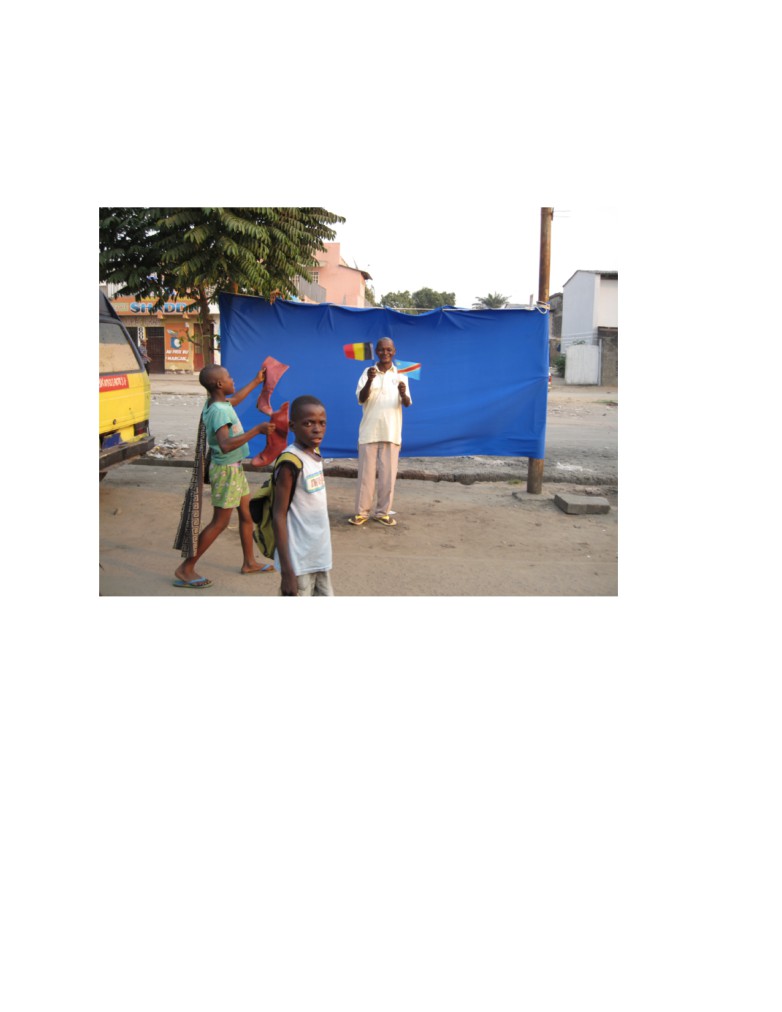
Figure 1. Made in Belgium — Globe Aroma, Ernst Maréchal 2009 © Ernst Maréchal
MON May 20, 22:07 -- Ernst
Encountering for me is co-creating, it brings together multiple discourses in a
single territory. A territory where everyone involved in has the tendency — because
of the differing, the many motifs and counterpoints developing — to deterritorialize,
change, alter, move, and to become.9 In making something collective, I need to
open up my discourse, otherwise my autonomy will not last. In order to enable and
activate new expressive territories where everyone can progress, I’ve got to be
open for what I don’t yet know.
2009. I am making a film together with two young men from Djibouti. I got to know
them in “Klein Kasteeltje,” a big asylum center in the heart of Brussels. It is the
Belgium National Day and we join the parade by waving one big Belgian and one
pirate flag. In my discourse, the pirate flag at that moment is a symbol for the
inhumane politics of the Belgian state concerning refugees. But the more we
merge into the crowd my co-marchers want to roll up the pirate flag. Their
discourse is a different one: they want to be part of this day as Belgians, be
acknowledged as a citizen of — for them — a new land. They want to party
together instead of contesting a dubious reality. Initially I feel disappointed, out of
With (Violent) Love
185
Art/Research International: A Transdisciplinary Journal
Volume 5 Issue 1, 2020
plan and focus… but the more we move on, now waving only the “tricolore” and
shaking hands with all kind of people, we become an action within the action. One
of joy, hope and a “just” protest. An implicit insisting protest — constructive and
seemingly uncommenting.
Collaborations are something I usually look forward to. As in literally looking at a
near future. What is going to happen this time? It’s not always about agreeing on
the matter or subject at stake. Collaborating naturally harbors an opposite,
dissensus, or antagonism.
Bearing the spirit of a challenge, coming together and being in exchange, it has a
violent potential. A struggle with surely the other, but foremost with myself. You
give examples of being out of your comfort-zone when you feel reacting too
directly, too offensively, or too out of control. For the other you seem to show your
vulnerable side and her doubt and discomfort decreases. Being vulnerable here
turns out to be constructive. However there is no “encounter manual,” we can
never know.
When I get pushed out of my comfort-zone, I feel it. Each time, it is different and
there are many ways to deal with it. But it always creates a self-reflective moment.
Sometimes in silence, sometimes out loud! I want it to be a call for action, re-
orienting myself in any kind of relation with the other.
TUES May 21, 13:12 -- Heike
A comment after reading what we wrote so far: We do not need to react to each
other too directly. Just saying, the note on encounter was just a note. It doesn’t
mean you must address it. However, I would keep the map we made during our
nightly talk yesterday as a mental background for composing this conversation.
Let's somehow stick to what we experienced. What changed in us, how did it and
through what?
TUE May 21, 15:43 -- Ernst
Sure, but your note on encounter made me think — on how it works and that
encounters are collaborations. I think working together, in general, makes people
disagree in order to find out how to continue. In describing on how things change
me I have the need to reflect on how it works. Then practices of discourse and
territory come to my mind.10 Let our writings just trigger one another.
With (Violent) Love
186
Art/Research International: A Transdisciplinary Journal
Volume 5 Issue 1, 2020
WED May 22, 12:31 -- Heike
We, my collaborators and I, want to create portraits of the city in co-creation with
people who we would meet in different areas of the city.11 Although thinking of
ourselves to arrive open-minded, we are discussing already an idea of a group
portrait with people at and around the iconic CCN Building next to the North
Station. We are inspired by James Ensor's painting “Vive La Sociale,” a free
association but obviously preoccupying our “open mind.” We convince ourselves
that this would be provoking: a coming together that otherwise never would
happen. We call it an interesting “twist” of the assumed and expected reality.
In the weeks coming we learn that North Station functions like any other territory
that must be shared. A sharing that must enable co-existence of many people with
extremely different interests, preferences and maybe just one thing in common: no
other place to be and to spend time. The people we meet do not really show
strong interest in developing a specific portrait of their “home,” but they do like to
meet us and the attention we give them. When we discuss the possibility of
scheduling a photoshoot for a group portrait, we are confronted with the sheer
refusal of such an idea. A desire suddenly lights up though
— interestingly
opposing our idea completely: As “models” they want to pose as strong attractive
individuals. "Just for once!”, I remember them repetitively saying.
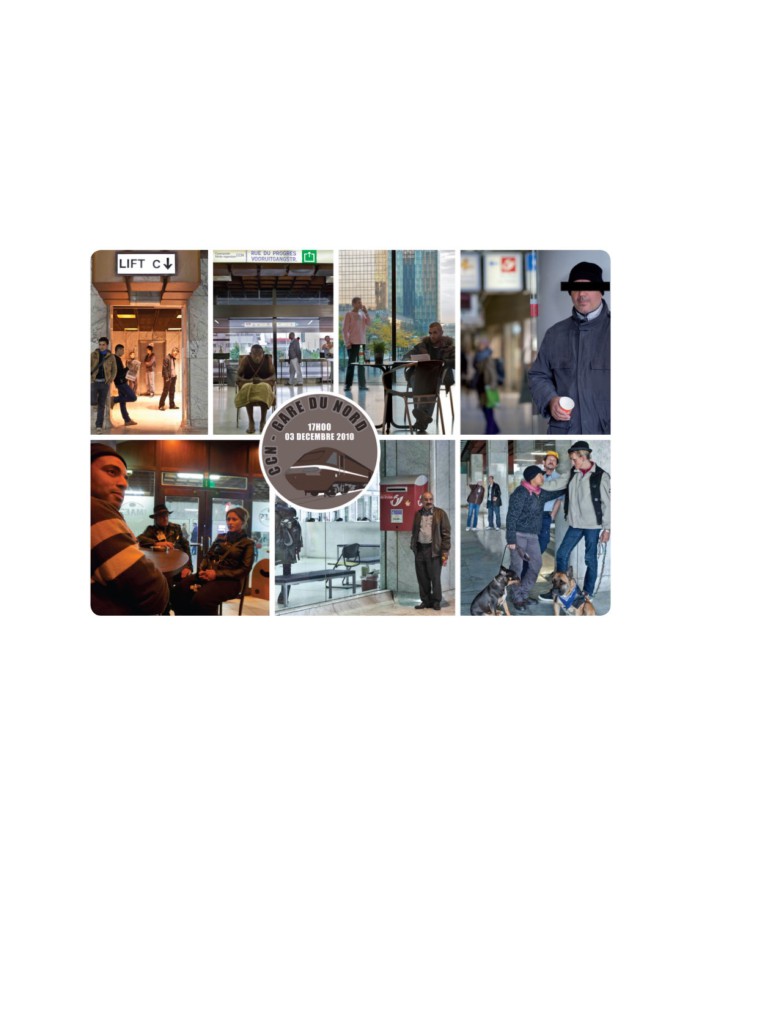
What then finally gets printed on thousands of postcards that are distributed
throughout Brussels (serving as invitation to the re-enactment of the depicted
scenery on an announced moment in the near future) is what happens through
mutually refusing each other’s ideas. We definitely had more than one shooting
session — one for every candidate, in fact. On the montaged picture everybody
would appear “apart together.” LAT12 relations in all airs…
A youngster from Bulgaria is available for a shooting first. He is reigning over the
marble floor for breakdance battles as if he is the owner of the station hall. He
wants to be depicted in a spectacular jump. This causes some rivalry talking
amongst him and his mates. Eventually they group up in-front of an elevator, kind
of "hanging," like after a good session. A continuously drunk man is furious that he
has to hide his beer in front of security. In the picture he wants to present himself
in the most central spot of the hall, in front of the post office next to the red
letterbox with a can in his hands. The most appreciated “queen & king of North” —
as she is called by her “followers” due to her ambiguous gender — wants to be
posing laying down graciously on the floor, her huge German sheep dog at her
With (Violent) Love
187
Art/Research International: A Transdisciplinary Journal
Volume 5 Issue 1, 2020
side, melancholically gazing. In the end, she decides that this would be a bit too
“idle” and asks her two “best friends” into the scene, herself redressing as a boy
with a cap. A young man that just has beaten his girlfriend to death a couple of
days ago — when high on experimental drugs — steps out of the project.
Obviously and understandably. Naturally and of course. A group of social workers
comes to the decision to be pictured in the smoking room of the darkest bar of the
station: "That's where we relax.” …
Figure 2. Postcard From North station — C&H, 2010 © C&H
Once the postcards are printed, another man, who calls himself the station guard,
decides that he does not agree any longer with being portrayed, and demands
from us to blacken out his eyes.
Still today, when I happen to see this postcard, I have the sensation that I don't
know who exactly made it. I definitely spent a lot of time meeting, discussing, and
arguing with people, and endless hours for getting their last agreement after
finalizing the lay-out. However, the images printed are far from what I was able to
imagine when we first arrived at the station. We were somewhat inspired, just at
the beginning of a long itinerary and conditioned by the horizon we were given.
With (Violent) Love
188
Art/Research International: A Transdisciplinary Journal
Volume 5 Issue 1, 2020
Often, when being with people whom I do not know yet, I am in the middle of being
neither fully understood nor totally rejected. This brings me to my senses and out
of my head. Literally. Images that eventually emerge from this way of “being at a
place” come about rather sensual-ly than concept-ually. Writing this makes me
research the roots of
“sensual”:
“connected with gratification of the senses,”
“pertaining to the senses,” “lewd and unchaste.”13 The latter meaning “unlearned,
impure and morally questionable.” Aha.
THU May 23, 16:55 -- Ernst
Processes overruling a pre-existing idea or even initiating a project unintentionally.
Together with many people I organize a local communication network (as opposed
to a local security network) by making pirate radio in people’s homes.14 Neighbors
can join in by telephone. When this project is finished me and my close
collaborators are inspired by our experience of so many voices speaking and other
sounds implied. Something completely different with the same people of the
mentioned network is possible, and we start to make a musical radio-play as well.
Everybody of the network, including my collaborators and myself, is there to
perform all the voices and make sounds by handling all kind of objects. We
actually are about to
“perform,” for the first time ever, a well-hidden French
Avantgarde text.15 In this story people gather at an intersection and witness the
end of the world, initiated by scientists and backed up by the government, an early
allegory for how mankind is presented as being the factor destroying the planet in
an era called Anthropocene.
Processing seemingly insignificant reflections, thoughts, and conversations made
an idea emerge. We could say we were encountering materiality itself. Without
having much of a concept, there was fluidity that allowed things to emerge. On my
co-creation trajectories, I learned to respond based on what others (want to) do.
There was always already something made, someone that made. And then
something or someone picked it up, joined in. Competences that I cannot expect to
meet in advance became present. The radio play came not through a big artistic
idea and choice that started a process. It was installing itself through a multitude of
“movements,” decisions, more or less negotiated between the people involved. It
was all about getting somewhere step by step, orienting constantly, taking
decisions on the way to create something that I did not expect — and it did need
some courage to trust that there “is something in it already.” Ready to be notched
and carved.
With (Violent) Love
189
Art/Research International: A Transdisciplinary Journal
Volume 5 Issue 1, 2020
FRI May 24, 21:37 -- Ernst
2010. I am traveling to Kinshasa, in August of that same year I am going to
Aleppo, back then a country still in peace. In both places I am visiting the family
and friends of two men I met in Brussels.
Figure 3. Blue Key Identity - Ernst Maréchal, Kaaitheater 2010 © Ernst Maréchal
After two years of conducting a community art project, working with refugees that
became friends, I wondered what I really meant for them? Me, a white Western
artist, that can find the necessary means to go and stand wherever I like versus
my new friends, having been forced to leave their country and unable to go back
home. What if I moved to their homeland? Would I bring them closer to their
beloved ones? Could we establish a genuine dialogue with me as messenger?
Does it make a difference for them? What would it do to everyone involved and
how would our friendship evolve? Finally, how can this making of a network of
encounters be framed and presented on a Belgian theater stage?16
I talked to them about the idea of going to their home countries in their place and
meet whoever they liked me to encounter. There was immediate enthusiasm. We
recorded video messages from them to several people of their choice and I
With (Violent) Love
190
Art/Research International: A Transdisciplinary Journal
Volume 5 Issue 1, 2020
traveled. I was a kind of go between, a physical messenger in an era of digital
online communication. Would it prove to be durable — me being a substitute for
them communicating between here and there?
Like this, I ended up in two foreign places at my own proposition, but sent by my
friends. Although I was mobile and they stayed put in Belgium, they guided every
step I took. Me being there enhances their absence. Meeting their relatives
created for them lots of emotions and I got involved. Our friendship grew and
relations entangled.
After the project is realized I collapse. The movement stops. The dialogue stops.
I wanted to act, and I did, but looking back to it, it was them that made me act,
move. I took initiative but I only did this because of their immobility. In many ways I
started the project for myself, to still my desire for connecting in a cruel but
beautiful world. I could not be sure who would benefit in what way from it. We did it
by going through a process together and this created real personal relations. They
last until today.
The project is well-received and I feel disappointed. I worry that I have stopped
what was vital to this work. “Everything” stops after the presentation in the theater.
But how could I have continued? As a work this process is predestined to end
abruptly. Only as a continued practice it can go on.
Operating in the public realm I strive for social and artistic continuity. I search for
concepts that make persistent movement on all sides. I fail, I reflect on that failing,
I keep on trying. This is what I have, it seems. What we all have.
SAT May 25, 18:15 -- Ernst
On methods of co-creation:
Why do I want to include as many people as possible in co-creation? Because I
don’t want to “make things” alone. I want to escape and make escape isolation.
For this to happen I have to connect with my environment. I come up — as so
many others — with plenty of concepts and methods to work collectively. I want to
live in a better world. I wish it for myself and therefore for others. It starts with
myself, ourselves. It’s my weakness. Ours.
With (Violent) Love
191
Art/Research International: A Transdisciplinary Journal
Volume 5 Issue 1, 2020
My methods are the result of my frustrations and disappointment. My
disappointment of not reaching everyone in making something together. What
helps me at a certain moment is what we today call “shared action.” Today, this is
trending in community art and artistic co-creation. It is commonly considered acting
in such a way that a multitude of people makes a single image, acting as gesture.
Figure 4. Postcard From North station — C&H, 2010 © C&H, Tiziana Penna
With (Violent) Love
192
Art/Research International: A Transdisciplinary Journal
Volume 5 Issue 1, 2020
SAT May 25, 08:20 -- Heike
You also phrased it recently with "how to disable our powerlessness?”
Through my doing nothing will necessarily and directly change but myself; doing
nothing will obviously just let happen what is dominating, it supports its flourishing,
unquestioned.
Being in discomfort with currently established practices and courses of action I
thus feel invited to “do something.” Of course I “do,” it's in the genes of what
“artistic” means.
Sorry, etymological roots again: “ar” of ar-tistic meaning fitting together; “connected
17
18
to the making of weapons.”
“Weapon,” an “instrument of fighting and defense.”
Again, “encountering” in its oldest use of the word, not yet ameliorated towards
“pleasant meeting and exchange”
— right in the middle of disharmony.
Instruments, artifacts for fighting.
What am I fighting for? What do I defend?
The reasons for artists to think and make work are as manifold as the functioning
and patterning of their minds. When interested in a self-profiling career in the arts,
I, as individual artist, obviously will create another sort of artifact than when I were
interested in altering processes of becoming.
I witness and stutter along my thoughts that are coming on my way. I am
processing myself. I experience this as self-relativizing and powerful. How to make
others process that way? Who am I to make others “touch” a certain thing or
thought?
In order to upset the very situation that I want to provoke, stir, question or enhance
I need to make scores (as in musical notation). I need to make certain things
happen in a certain chronological order. When I want people to witness something
without me instructing them, I need to guide their gaze, while obviously making
sure that they do not feel that something or someone is conducting them.
With (Violent) Love
193
Art/Research International: A Transdisciplinary Journal
Volume 5 Issue 1, 2020
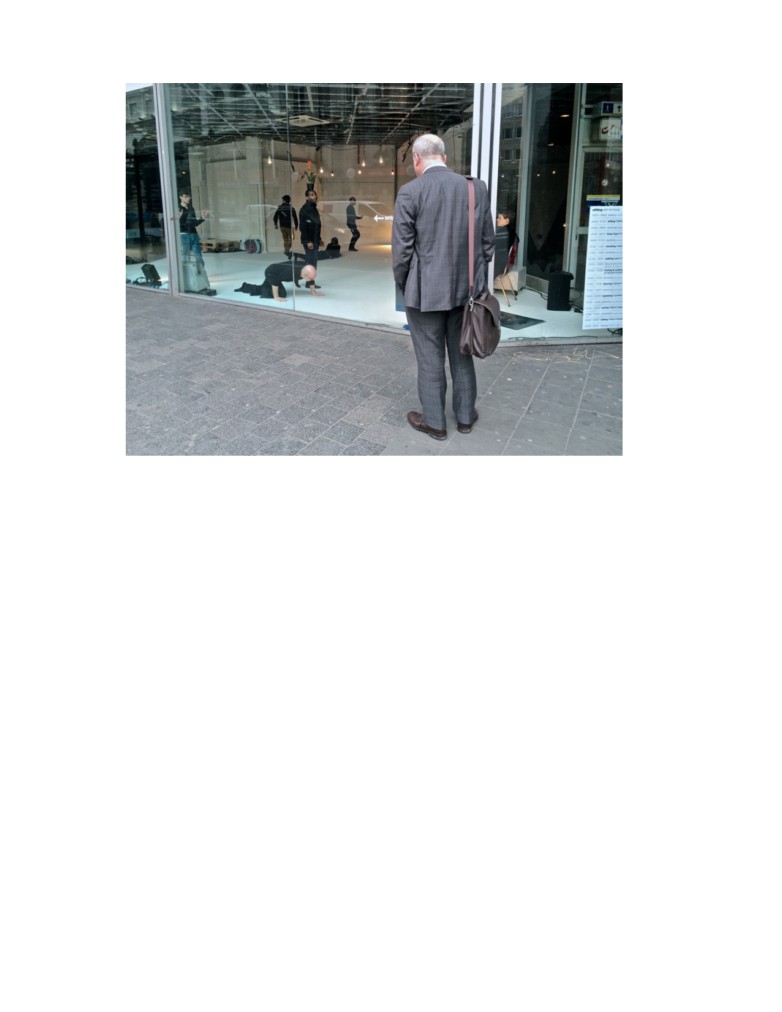
Figure 5. Sitting With The Body 24/7 — Radical Hope, 2010 © radical hope
How to use the habitual knowledge of people “reading” shop-windows in order to
awaken their curiosity, make them pause on their way through the city?19 Am I a
trickster asking how he can fool others? It’s tricky.
The shop-window becomes a quasi shop-window. Many things must function
exactly as one is used to but certain things need to “be wrong.” Extremely small,
but precise “mismatches” must be installed: things that do not comply with our
unacknowledged expectations. As my guidance becomes more subtle, the more I
feel like touching ground. I learn that my doing — in the best case — is nothing but
provoking a mind shift … perhaps inducing a gaze shift.
SUN May 26, 08:31 -- Ernst
Yes, make, become, or shift… and step-by-step. Still, specific artifacts enable a
certain kind of art? Specific goals produce appropriate “weapons.” Not all of them
are constructive. It’s hard to think in this context about the legitimacy of weapons
in general.
With (Violent) Love
194
Art/Research International: A Transdisciplinary Journal
Volume 5 Issue 1, 2020
There are as many ways of being and working as there are artists. Certain ways
and works have the power to question reality and for those it is harder to be
commonly acknowledged as “being art” than for others selling well on the art
market. Works that deal with encountering, differing and addressing the social in
us need a very personal way of curating, in the same time they result in less
recognition of the individual person. This kind of work is mainly impossible to
profile, and this agency is indeed very special. Often profiling makes such work
loose part of its stratification.
MON May 27, 09:14 -- Heike
What kind of visibility for what kind of art?
The instruments I personally prefer do trigger a certain “dis-appointing sur-prise” or
“a-mazement” in the ancient
— not the current! — sense of the word. “A-
mazement”: before maze was directly noting “labyrinth, a baffling network of paths
or passages,” it meant “delusion; confusion of thought and bewilderment, being
perplexed.”
I am perplexed and an interesting movement takes place: things diffuse, I lose my
assumed focus and can walk astray; and therefore end up in a state of exploration.
Luring back into the wild — not cleared and clarified but unsettled — I actually can
discover anew. Things are back to being unanswered, my thoughts are back to
being not yet pacified. I am reorganizing.
One of the two yoga masters I follow — both in how she approaches yogic
philosophy and physical practice — predicts "the future might happen when we
don't change.”20 When I hear these, her, words for the first time they make my
world stand on its head for a moment. They make me realize — spontaneously as
it can be — that I do believe in change.
I spread my toes out on the floor. It demands some effort widening them and
simultaneously keeping a regular and calm rhythm of in- and exhalation. I connect
my soles muscularly to my pelvis and concentrate on holding it in place while
slowly but steadily orienting my spine up and forward, and eventually — while
holding these two directions
— downwards. My upper body ends with an
“unchanged” spine in Uttanasana = Standing Forward Bend. Today, going in and
through this movement and posture, I observe what happens just because I keep
my spine “un-changed.” The surrounding muscles adapt — they align, lengthen
and, like this, soften or strengthen. In doing so, they function vitally.
With (Violent) Love
195
Art/Research International: A Transdisciplinary Journal
Volume 5 Issue 1, 2020
Artistic instruments that I experience as having a vitalizing force do function like a
straight spine within a lazy net of habitually working muscles. They stand as
something “stubborn” and make things reorganize accordingly. It takes so little to
make things happen. Still it means letting go of habits we grasped and hold on to.
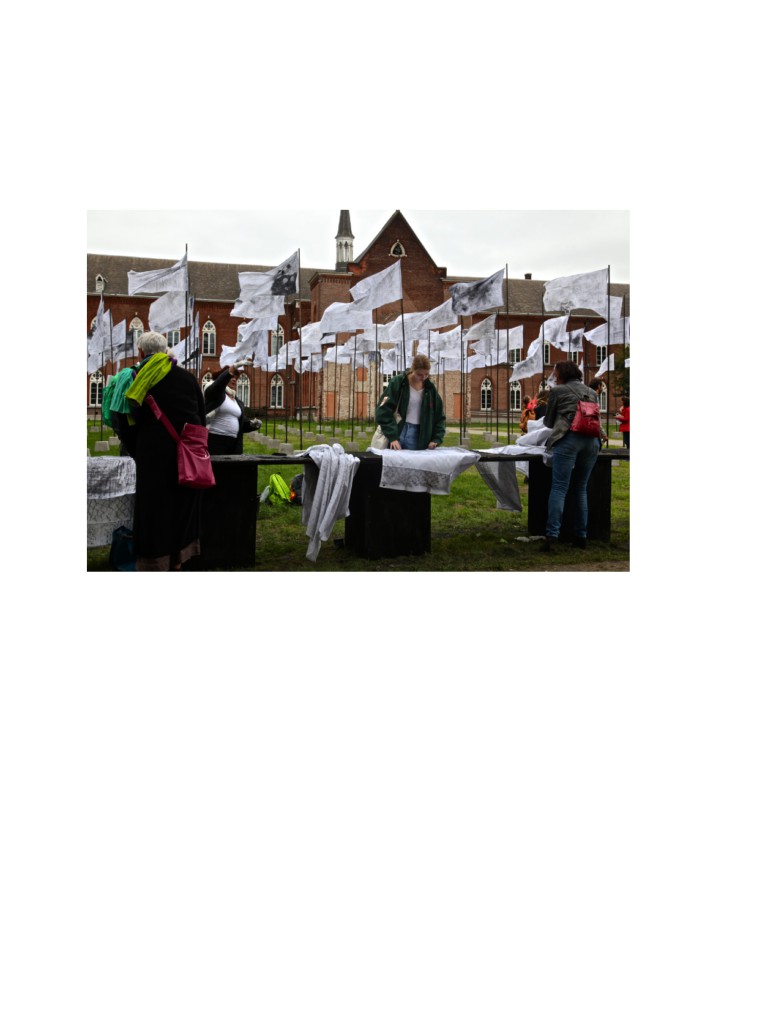
Figure 6. Vlaggenveld — Manoeuvre, Hannelore Van Dijck, 2017 © Ernst Maréchal
MON May 27, 15:51 -- Ernst
I easily grasp for things, images, ideas — everybody does — and this grasping is
violent. Maybe sometimes, depending the context and situation, appropriate but
violent nonetheless.
I am in Kinshasa. I am invited at the private estate of the Belgium ambassador for
a fancy reception concerning Congo’s independence. Everyone famous dealing
with Congo is present, shaking hands with our beloved king Albert. We are served
drinks and food by the local people. I am taking pictures, habitually, driven by the
interest of the project that brought me to this city, but right here, right now this
doesn’t feel right. What ethics are at play? I still want to cover this situation. I start
asking for permission individually and go on photographing people serving. I make
With (Violent) Love
196
Art/Research International: A Transdisciplinary Journal
Volume 5 Issue 1, 2020
sure I get their contact information and promise they will receive the picture I made
from them. Which happens.
All of this happens following an inner call: listen, sense whether you would like
what is happening when you switched positions with
“the other.” Then act
accordingly. Surely, I am able to feel when a situation is not “right,” but eventually I
will not change the fact that taking pictures in general is intimidating. In the best
and worst sense of the word, I come too close, too fast. Taking photographs has
nothing to do with having encounters. But it happens that we encounter people just
because it is so problematic to “shoot” around.21
TUE May 28, 12:02 -- Heike
Makes me think of someone feed backing on the performance based on the
postcard inviting people to the North Station of Brussels: “I am so disappointed.
Not because an actor doesn't show up or has fallen asleep under the postbox
where he was supposed to stand… I am surprised and a bit angry about myself.
What did I expect? A Tableau Vivant? At first, I don’t even dare to look at the
people I am supposed to come for. I am ashamed to look at miserable people
sitting in the streets all the time. And now this art piece is just a lousy stinky
moment — the images on the postcard are not well re-enacted. But people are
posing for me, staring at me. They prepared for me, they wait for me to look at
them. I watch into eyes I would harshly avoid in any other circumstances. It’s
incredibly awkward.”
It's complex. Encountering is complicated. But why not. I do want to make things to
be felt in their maximal complexity. I like a public to self-initiate and steer their own
reading/s. I borrow here from my own experience. I only really come in touch —
with someone or something — when I really want to “read” what is going on.
Otherwise I just project or react, and that only reconfirms my thoughts — some
convictions I (sub)consciously have. Something complex can, but does not need to
be complicated — and even that would be ok. As a dance teacher once said: com-
pli-cation is fine. It means things are “surrounded, encompassed, folded together
and confused.” So what, it invites us to unfold, diffuse, and look what is in it;
penetrate what is around “a thing” … and find out. He opposed it to sim-pli-fication,
the act of making become “one fold, unmixed, reduced.”22
With (Violent) Love
197
Art/Research International: A Transdisciplinary Journal
Volume 5 Issue 1, 2020
TUE May 28, 00:03 -- Ernst
In many of the artistic co-creation projects I take part in, this “finding out” happens
throughout “acting together.” I mentioned it earlier, a kind of action that can get me
out of my comfort-zone. Realizing an aesthetic dimension within the framework of
a collective concept is a way to understand “through the senses,” using your
words. I cannot rely on my ideas, but follow the reality unfolding, see what can
come and fit together.
Projects I was co-realizing with a community art organization in Ghent were
bringing me in touch with how influencing one another is “at work.”23
For weeks I work together with the people of the organization’s textile atelier. A
group of people with various backgrounds. We create various patterns to apply on
the charcoal frottage technique. The charcoal we decide to burn ourselves. The
participants do “act.” They do so on the basis of invisible effort that happened
before they join. Another few weeks later an action is due to happen. Now the
public is realizing work: an installation in a wide-open space, planned and guided
by the artist-in-residence and the people running the organization. Everybody
takes a white flag and applies a unique drawing on it. They hoist their flag into the
ground, co-creating a field of flags. It is a heavy production, but when we are finally
performing with the audience I feel as light as a bird. It works. The preproduction of
one group of people enables another group of people to act in the moment.
We “moved,” each of us being part of a different grouping of people. I was part of
both the group of artists that “moved” first — the textile atelier welcoming artists in
residence — and the group that “moved” after — the flag field makers. Together
we formed a total amount of people — a so-called “many-fold” — that has
prepared the shared action and has made this result in a collective work.
We could call it a complex process that got marked by different moments where
crucial decisions were taken and where people executed things. Through the
occurrence of these points for orientation at different moments, something could
appear as one image at one place, shaped by many. Eventually.
TUE May 28, 15:14 -- Heike
Powers. Belgium voted yesterday and I don't know what to consider first. Weapons
are created according to fight for or defend something that we perceive as being
worthwhile or threatened. What I defend or what I find fun is crazily different than
With (Violent) Love
198
Art/Research International: A Transdisciplinary Journal
Volume 5 Issue 1, 2020
what a political party leader or a child just crossing a border by foot (and in shoes
falling apart) defends or finds fun.
How dear lord can I acknowledge how small and at once how almost eternally
dead I am? Gallons of galaxical times I do not exist and then after a nanosecond
of being alive I go back into the exact same non-existence. How the fuck can I
dare to be more full of fear than driven by curiosity, trust, and joy, praising the life
that I soonish will have lived?
So far, so desperate, so good — the dark cyclic dilemma remains:
I imagine. All living people have mutually acknowledged this nanosecond of a
chance to live. Now we are humble and do want to have a joyful life. We have very
different ideas about what is fun for who and this tears us apart.
WED May 29, 15:14 -- Ernst
Your “spine” practicing yogic asanas! All we can do is to find out how we can
remain open to what is disturbed. We are free to stick to the trouble. Things do
reorganize themselves.
WED May 29, 15:20 -- Heike
The public gets nervous and I understand now that, from their perspective, I do not
give enough to make them feel safe. For me this feels very very uncomfortable.
But it’s exactly what I want. Awkwardness is the least one can meet right here —
anger, confusion, getting impatient
— as nothing is provided clearly
— is
happening too.24
WED May 29, 15:22 -- Ernst
Things, happening in life — all the time and regardless to where — often do the
same. They make us stick around although nothing is just likeable. We rather hate
it. Awkwardness is the least one can meet right here — anger, confusion, getting
impatient —as nothing is provided clearly — is happening too.
WED May 29, 15:23 -- Heike
"Oh things are so hopeless,” I think, and this thought does not “sound” like me.
With (Violent) Love
199
Art/Research International: A Transdisciplinary Journal
Volume 5 Issue 1, 2020
Where to attend to for surprising insights, something that inspires? How to move
for such a thing to occur to me?
WED May 29, 15:24 -- Ernst
I think "it's beyond hope,” … like everything seems to be beyond these days.
Beyond Brueghel, Beyond Care, ... Amen & Beyond.25 Amenra.26 Sunra.
WED May 29, 15:26 -- Heike
Yes, so it is and out of reach. Yes, so it is, God. God of the sun. But what with
“beyond”? Out of reach! Beyond the sun? Should we all give up as this star will
soon explode?
WED May 29, 15:30 -- Ernst
Beyond, out of reach, indeed — also “to pass (someone's) comprehension.” What
is true might be far beyond anybody's capacity of grasping things.
WED May 29, 15:35 -- Ernst & Heike
(typing in chorus)
We do want to have fun. We do not want to look away. So we obviously — as so
many — end up in despair. Still we love live and we do experience joy. What does
bring the latter? And to whom?
WED May 29, 15:37 -- Heike
(copying and pasting a quote)
“We should do away with the absolutely specious notion that everybody has to
earn a living. It is a fact today that one in ten thousand of us can make a
technological breakthrough capable of supporting all the rest. The youth of today
are absolutely right in recognizing this nonsense of earning a living. We keep
inventing jobs because of this false idea that everybody has to be employed at
some kind of drudgery because, according to Malthusian Darwinian theory he
must justify his right to exist. So we have inspectors of inspectors and people
making instruments for inspectors to inspect inspectors. The true business of
With (Violent) Love
200
Art/Research International: A Transdisciplinary Journal
Volume 5 Issue 1, 2020
people should be to go back to school and think about whatever it was they were
thinking about before somebody came along and told them they had to earn a
living.” 27
Figure 7. © Common Wallet
WED May 29, 15:45 -- Heike
Inshallah. Shared economies eventually. The “Common Wallet,”28 a project lived
by 10 Brussels artists? Is this art or just an experimental way of living together
beyond equality? Does it matter? Yes, it does. With the day I realize more
awkwardly that we are still confused by what “artistic” means.
THU May 30, 14:33 -- Ernst
“ar” means “fit together”!
Works that engage with social, political, or economic issues in conjunction with
others are not even perceived by the market-driven art world. They are not
evidently considered art and once they manage to be acknowledged as that they
are hard or impossible to sell. I can defend such work not by claiming their “artistic
high value,” but by making and experiencing them together with others. Those
works are driven by a social process, intrinsically artistic. Social aspects are
With (Violent) Love
201
Art/Research International: A Transdisciplinary Journal
Volume 5 Issue 1, 2020
thought of as their origin, provide part of the meaning and entangle with an artistic
approach. Experiencing this process is part of the aesthetic character of the
project. John Dewey stresses in his book “Art as Experience”29 that successful art
(succeeding in being artistic!) stands in relation with life and therefore creates new
experiences. I think this quest for continuity is in line with my personal search for
an artistic practice that doesn’t stop, that persists with less violence and more love.
However, all art has social agency, and this is turning out being an unfortunate fact
in many cases
— when social agencies are not thought through and
consequences occur without having been considered in any way. Just think of the
glorified artifacts that are only made to be sold or the individualized artist in
general. This is what is producing an a-social art-marketry and holding it in place
as we know it today.
FRI May 30, 20:21 -- Heike
Activism. I take part in an action organized by a Belgian cell of an international
Activist network. The way people proceed and work reminds me on how we
organize artistic projects. What is different though?
An activists’ take on action does not search for a public in theaters. They might use
those spaces to prepare the interventions taking place in the institutions and
platforms where decisions are taken on a political level. The action's public is
everybody potentially voting ... like we did yesterday. The aim is to confront people
with a subject. And in their case the subject is getting the message across:
30
"Declare a state of Climate and Ecological Emergency.”
(“Acti-vism”
=
“advocating energetic action”)
SAT June 1, 18:30 -- Ernst
You are talking about the action at the European Parliament during the EU-
institutions’ Open Door Day — already a hybrid in my eyes. Joy meets despair!
Confetti and slap-stick versus yellow jackets, yes.
Since my early twenties I am interested in a combined practice of art and activism.
I used to make no distinction. At a certain moment I bring a raid with wooden rifles
at the Antwerp consulate of Mexico in relation with a theater piece dealing with the
violent and bloody oppression of the people in Chiapas.31
Throughout the years the activist in me takes a more passive stand. There are
many reasons involved. Activism is a very pragmatic practice. I hope that my
With (Violent) Love
202
Art/Research International: A Transdisciplinary Journal
Volume 5 Issue 1, 2020
action changes society. I hope that understanding and awareness are rising. I
need to be clear and well understood. In art, being misunderstood is part of the
quality. It is part of the friction. Not appealing to everyone, although you want to
reach an audience, is part of its power. That's why art is no entertainment. That's
how we question — while not being generally approved — the dominating
discourse. In that sense, art becomes our weapon for fighting and defending. I
have the experience that it's easier to defend myself with art than with activism. In
activism the risk of doing things in vain or getting hurt is much more real.
With the election from Sunday I have to think about the kids going into the streets
32
for our climate
: there is no green wave at all! Now, they must have the feeling
that their mass demonstrations were all for nothing. In their eyes, their scream for
change has not been heard. Still this rejection feels violent — and without police or
any other kind of state brutality. A heavy encounter with the world.
Probably it's more effective to fight and attack with activism, then with art or new
hybrids. Activism is more immediate than the most directly engaging performance.
The place, indeed, makes the difference. It is more pragmatic and less sensible.
Figure 8. Extinction Rebellion Brussels, 12 Oct 2019 © Wouter Maeckelberghe
With (Violent) Love
203
Art/Research International: A Transdisciplinary Journal
Volume 5 Issue 1, 2020
Figure 9. Youth For Climate, Brussels, 24 Jan 2019 © Ilya Pardo
Throughout the years, I opt more for defending through art than for attacking
through activism.
I use my way of working as a weapon, but it's less effective because it hurts
differently. It is rather uncomfortable for me and the other.
Obviously, in order to avoid criminal behavior, it is not enough to make someone
feel uncomfortable. It’s impossible to change the mind of someone that is simply
immobile and stuck to their zone.
Endless story. Let’s have a beer ;)
June 1, 19:01 -- Heike
Cheers. Back to the stage, artistic research and “my” practices. What am I fighting
for? What do I defend?
I apparently need to continue to find out how to do and present things in such a
way that they address our senses and the sens-ual. I need to continue creating
closeness between the aesthetic realm, politics, academia, the sciences and
humanities. I make myself stuck there and sticking to the “artistic,” and it's ok.
With (Violent) Love
204
Art/Research International: A Transdisciplinary Journal
Volume 5 Issue 1, 2020
I investigate artistic research.33 I can proceed in a way that makes me not only
meet other people and struggle with their concepts that I un/recognize. It makes
me do things I would not come in touch with otherwise. It forces me to make
choreographies with all kind of people, not in order to make a piece of art, but in
order to execute a score for learning together.34 It makes me provide a situation
enhancing how I contribute (or not) to “something,” to a possible organization. It
forces me to make pieces for the theater that look like a junkyard but one with
35
many faces
— an environment that forces me to not take communication
between me and another for granted. Although things are prepared, carefully
arranged, scripted and rehearsed, life wants us to remain open-minded. The older
we get, this seems to be less evident. Luckily, we can always already practice!
Eventually it makes me design and construct a room accessible at all times. Not
more than 15 m2, it presents itself as a huge couch or bed. The floor is laid out
with a puzzle of cushions neatly covering the entire surface. There are wooden
elements hanging on the wall. They can be fit into the “bed” in exchange with a
cushion of the same size. The room can never be locked but the door can be
blocked from the inside with the “last cushion,” made to measure. There are
curtains to cover the windows — giving out to a little garden, the wider Campus
and a corridor of the building — as it pleases when taking naps or screening
movies during the day. This room invites literally
“every”-“body” that possibly
passes.
“Aloud, in silence, with silence, alone, in company, through words or gestures,
senses or thoughts, through dreams, with dreams, with things, with people, with
nothing, with the nothing. Conversation as an act of living with others. When
reserving a slot - use the calendar hanging on the wall. When no slot is reserved -
feel free to just come in. When coming in - leave your shoes outside.”36
These projects were called “doomed to fail,” and “inviting vandalism and theft” by
the institution. Until now, not even a red-wine stain is to be found in that room.
People seem to make it possible for each other. #TripleHope!
SUN June 2, 00:03 -- Ernst
Maybe it’s time to get very concrete about the intrinsic dynamics of doing
collaborative work and talk about authorship in co-creation.
With (Violent) Love
205
Art/Research International: A Transdisciplinary Journal
Volume 5 Issue 1, 2020
Figure 10. Conversation Room at KASK school of arts Hogent, 2017 - today ©
When I am asked as an artist to join a co-creation process, and if the proposition is
attractive, I say, “yes.” Initial doubts or uncertainties usually resolve in the process
and if they do not, it happens that collaborations come to an end.
Working together means making my own work and naturally establishing co-
authorship throughout the process. If I really mean it, I easily can overcome initial
distances. My experience is that I gain autonomy if I let go of some. In terms of
continued ecologies of practice/s, there is much ground for those to flourish.
I meet artists who evolve and truly accept co-authorship, others consider
themselves as individual artistic actors.
A project in which the initiating artist embraces co-authorship results in a book,
becomes an expo and gives rise to a performative work. All of these versions are
authored by again other artists, involving again other people as co-creators and
performers. The co-authoring artists all report that they can take the invitation
without missing authenticity. The latter occurs through how they work with the
given, not through who is creating a certain beginning. People are creating an
autonomous work, which is part of a process not initiated but continued by them.
By doing so they take initiative within an ongoing process. It doesn’t matter
anymore who takes initial initiative since everyone is becoming (co-)author. A
many-fold of people recognizes themselves.
With (Violent) Love
206
Art/Research International: A Transdisciplinary Journal
Volume 5 Issue 1, 2020
When the work, previously “expo,” and before that “book” and initially “relational
objects,” is playing as “activation” at a performance festival, everyone is credited.
The lineage is communicated. I love reading the credits — in this case, they do tell
well the story behind the curtains. They tell at which time who was playing what
role, as such they hold so much more than names. They show how “mutual
influencing” is at work. Eventually the mentioned activation gets re-staged in a
different context with a different score and is realized together with again other
performers. The credits evolve …37
I remember that the mentioned festival was open enough to present the
organization in Ghent as an artistic actor. With the expo version of the same
project the museum refused to present full credits and only saw the artist as the
author. So far about different perspectives ;)
Co-creative work still has major difficulties to be acknowledged as an artistic
achievement. When perspectives differ too much from mine I get angry, I feel as if I
am working in vain. It is still quite a struggle and sometimes I lose my patience or
diplomatic approach. It’s a fight worth fighting. Although some people or
organizations have the tendency to give up on it. Maybe just because it is indeed
uncomfortable! Others — both individuals and institutions — are very much willing
to give multiple authorship (also with non-artists involved) the place it deserves.
There is change, m’lord!
SUN June 2, 18.42 -- Heike
Hey, if we end here, we still make it downtown in time.
Listen to some good sound — dance a little…38
Upload the whole thing afterward?
SUN June 2, 18.45 -- Ernst
Ok!!! 20:00 at AB …
With (Violent) Love
207
Art/Research International: A Transdisciplinary Journal
Volume 5 Issue 1, 2020
Figure 11. Vormfrakken at Performatik Festival
Brussels, 2017 © Ernst Maréchal
Epilogue
In performing this conversation, (which you just read) we want to make
things acknowledgeable; for ourselves first, and, in this case, taking into account a
reader.
What is getting overwritten through communal and multi-perspective experience
seems to us as being promising and emancipating. What has to be “given up on”
when it mismatches (our individual) ideas has obviously lost its capacity of sense-
making (for us). From there we can move on.
Making this contribution was all about dialoguing, arguing, and coming to terms
about how to together edit the fragments of text emerging through “just” emailing
each other for a while. Nothing is original in the arrangement that eventually got
With (Violent) Love
208
Art/Research International: A Transdisciplinary Journal
Volume 5 Issue 1, 2020
uploaded but is the result of us dealing with the conditions we laid out for
ourselves. Being affected by our “con-versation” meant continuous relating to the
fact that thoughts, assumed as being clear, turned out to be just messy enough to
give shape to.
Ideas for us are mental images, caught up in a circular movement of “getting born,”
consolidating, dominating, corrupting, and eventually losing any
(convincing)
agency altogether. Such a consideration is never free of devastating frustration
and presents the evergreen footage for deep disappointment and the darkness of
depression. At the same time, it has the power of freeing us up — moreover —
freeing us from previously functioning ways of doing and thinking. Ways through
which we held something in our place that freakishly doesn’t make sense in
common or other places.
And so we end up, again, with the need to not only rethink and redefine authorship
in discussions and on paper, but act accordingly. Both of us are engaged in
various forms of artistic / academic research structures, next to producing work
and teaching. What seems evident at this point is that we are still far from making
plausible that genius — the gift of high intellect — rather stems from collaborating
minds than from a singular perception of the world. Academic titles though cannot
be attributed to the effort and results of thinking and making in group. Still we
mean to see a chance right now for academia to help this and contribute to a new
understanding of how “knowledges” are born. At the same time this might help shift
the societal reputation of both the arts, the sciences and academia itself from
being perceived as “elitist” toward “collaborating.” Within the situation of academic
affairs, we see it as of the utmost importance to reconsider the automatic linking of
a PhD title to the investigation of one person. In order to help advance
collaborative behavior we need to own processes together and share the
“knowing” that comes with it as a multitude. When
“academia” prescribes
processes it generates as “theoretical, not practical and not leading to a decision”
one is — in “theory” — considering things, entertaining thought, and looking at
phenomena.39 This practice is meant to make one learn and grow. With a slight
change of mind and a chirurgical operation in the bureaucratic system, we think
academia can practically help students grow into individuals “in group.” With this
comes the experience of creating more or less great thought (and deed) through
the embeddedness and collaboration with what and who is touching us. In our
eyes this is the experience that makes us move from master-minds toward
emphatic — and who knows, even compassionate — beings.
Kisses!!!
With (Violent) Love
209
Art/Research International: A Transdisciplinary Journal
Volume 5 Issue 1, 2020
Acknowledgements
We want to thank all the people and institutions — remaining unmentioned as for lack of
space — for their support in making the realization of works listed here possible.
With (Violent) Love
210
Art/Research International: A Transdisciplinary Journal
Volume 5 Issue 1, 2020
ENDNOTES
Authors' note: The footnotes throughout this text are formulated according to our
attempt to credit case by case who made a work possible and how.
1
mid-14c., "place where one lives or dwells," also "general course of actions or habits,
manner of conducting oneself in the world," both senses now obsolete.
2
passive voice of conversare "to turn about, turn about with," from assimilated form
of com "with, together" (see con-) + versare, frequentative of vertere "to
turn" (from PIE root *wer- (2) "to turn, bend").
3
referring to Garcia, T. (2017). Twelve Rules to put Thought in Motion. 22-27. Published in
Movement Research. (2017). Spångberg. M. ed.
… Through Practices. (2019). Symposium co-curated by Heike Langsdorf in dialogue with
4
Bilal Kamilla Arnout, Alex Arteaga, Klaas Devos, Laetitia Gendre, Heike Langsdorf, Anouk
Llaurens, Irene Lehmann, Lilia Mestre, Miriam Rohde and Fransien van der Putt.
Un/Settled Residency. (2018). With Radical Hope, Heike Langsdorf & Ernst Maréchal,
5
Isabelle Wahedova, Leo Kay, Elowise Vandenbroecke, Wayaba Tokpwi, Dieudonné Zoko,
Winde Nulens and guests.
6
Old French encontrer "meet, come across; confront, fight, oppose," from encontre "a
meeting; a fight; opportunity" (12c.), noun use of preposition/adverb encontre "against,
counter to" from Late Latin incontra "in front of," from Latin in- "in" (from PIE root *en "in") +
contra "against" (see contra). Weakened sense of "meet casually or unexpectedly" first
recorded in English early 16c. Related: Encountered; encountering.
7
In a bad sense, "traitorous cooperation with an occupying enemy," it is recorded from
1940; earliest references are to the Vichy Government of France. Collaborationist was
used disparagingly in socialist jargon from 1922.
8
from Old French encontrer "meet, come across; confront, fight, oppose," from encontre
"a meeting; a fight; opportunity" (12c.), noun use of preposition/adverb encontre
"against, counter to" from Late Latin incontra "in front of," from Latin in- "in" (from PIE
root *en "in") + contra "against" (see contra). Weakened sense of "meet casually or
unexpectedly" first recorded in English early 16c. Related: Encountered; encountering.
9
An interpretation of Deleuze’s & Gautarri’s term de/territorialisation.
With (Violent) Love
211
Art/Research International: A Transdisciplinary Journal
Volume 5 Issue 1, 2020
10
Made in Belgium — a satire for philanthropists. (2009). Realised by Ernst Maréchal
together with the people engaged in Globe Aroma and with the residents of Klein Kasteeltje.
11
Postcards From The Future / Postcard from Northstation (2011). C&H (Christophe
Meierhans, Heike Langsdorf, Christophe Ragg) in collaboration with Christiane Huber and in
co-creation with hundreds of Brussels citizens.
12
Living Apart Together
13
early 15c., "carnal, unspiritual;" mid-15c., "of or pertaining to the senses," from Middle
French sensuel (15c.) and directly from Late Latin sensualis "endowed with
feeling" (see sensuality). Meaning "connected with gratification of the senses,"
especially "lewd, unchaste" is attested from late 15c.
14
Antenna — buurt communicatie netwerk. (2015). With Manoeuvre, Joris Hessels, Ernst
Maréchal & many others.
15
Er is geen Hemelgewelf — radioplay after Il n’y a plus de Firmament by Antonin Artaud.
(2016). With Manoeuvre, Ruben Nachtergaele, Olivier Provost, Joris Hessels, Ernst
Maréchal and many others.
16
Blue Key Identity / part 1 Common Ground. (2010). With Ernst Maréchal, Bhelly
Bompolonga, Taïf Preshini, Marianne Van Kerkhoven, Ingrid Vranken, Lara Staal a.o.
17
suffixed form of root *ar- "to fit together." Etymologically akin to Latin arma "weapons."
18
Old English wæpen "instrument of fighting and defense, sword," also "penis," from
Proto-Germanic *wēipna- (source also of Old Saxon wapan, Old Norse vapn, Danish
vaaben, Old Frisian wepin, Middle Dutch wapen, Old High German wafan, German
Waffe "weapon"), a word of unknown origin with no cognates outside Germanic;
possibly a substratum word.
19
Sitting With The Body 24/7. (2015). With Radical Hope, Heike Langsdorf & many others.
20
Orit Sen Gupta’s words in class. (2015).
Blue Key Identity / part 1 Common Ground. (2010). With Ernst Maréchal, Bhelly
21
Bompolonga, Taïf Preshini, Marianne Van Kerkhoven, Ingrid Vranken, Lara Staal
a.o.
22
Guido Severien’s words in a Cunningham-style dance class. (1995)
Vlaggenveld. (2017). With Hannelore Van Dijck, Manoeuvre, Chris Rotsaert, Ernst
23
Maréchal and many others.
With (Violent) Love
212
Art/Research International: A Transdisciplinary Journal
Volume 5 Issue 1, 2020
24
Garcia, T. (2017). Twelve Rules to put Thought in Motion. 22-27. Published in Movement
Research. (2017). Spångberg. M. ed.
25
Titles of cultural events. Beyond Breughel, Vlaamse Meesters. (2019-2020) Beyond Care,
Vooruit. May 23-25, 2019. Amen & Beyond, (May 16-26, 2019).
26
A ritual for the city of Ghent. (2019). Provided by Beyond the Spoken & Amenra. Executed
by +- 1000 people present.
27
Richard Buckminster Fuller. (n.d. ). Quote.
28
The Common Wallet. (2017). Initiated by Christophe Meierhans. In execution together
with 10 Brussels participants.
29
Dewey J. Art as Experience. (1934).
30
Die-In at Berliamont Building. (May 4, 2019). Through the working of Extinction Rebellion /
Belgium, 35 activists and the public present.
Bandana. (1998). With Ernst Maréchal, Benjamin Verdonck, Valentine Kempynck,
31
Valentijn Dhaenens, Iris Bouche.
32
Youth For Climate. (2019). Through the presence in the streets of several 100.000 kids,
youngsters, students, parents and grandparents.
33
How Do We Do It?. (2018). Alex Arteaga, Heike Langsdorf with the help of Chokri Ben
Chikha, Jeroen Billiet, Hilde D’haeyere, Martine Huvenne, Heike Langsdorf, Anna Luyten,
Jasper Rigole, Kristof van Baarle, An van. Dienderen, Kristof Van Gestel, Dirk Van Gogh,
Adva Zakai and the presenting researchers Elly Van Eeghem, Bauke Lievens, Rares Craiut,
Jeroen Billiet, David Denil, Tim Duerinck, Kristof Van Gestel and Klaas Devos.
34
Dance of the Day. (2018). Scored and guided by Heike Langsdorf, executed by always
different groups of people.
35
Mount Tackle. (2017) By and with Heike Langsdorf, Lilia Mestre, David Helbich. With Anna
Luyten, Adil Mabchour, Ernst Maréchal, Lilia Mestre, Wayaba Tokpwi, Dieudonné Zoko and
many more.
36
Conversation Room. (2017). Conceived by Heike Langsdorf with Adva Zakai and Hans
Bryssinck. Made in collaboration with Elli Vassalou, Caroline Mattheeuws, Karel De Cock,
Made by OYA (Manoeuvre) and the technicians of KASK school of arts.
With (Violent) Love
213
Art/Research International: A Transdisciplinary Journal
Volume 5 Issue 1, 2020
37
Vormfrakken — boek & expo. (2017). Kristof Van Gestel & Manoeuvre. Crafted by Gul
Atec, Zubeyde Balci, Rahime Koparan, Hediye Yigit Sahin, Sultan Altintas, Durna Özgür,
Gonül Atec, Gonül Altintas, Fadime Cetinkaya, Saniye Yuksel Göktepe, Hava, Hatice
Gozukucuk, Hajer Ucar, Laila Hasimi, Döne Kutlu, Griet Van den Broeck, Kevin Peeters,
Ismahan Yildirim, Gyulçeran Van Dort, Nacera Bendjafar, Nadya Varbanova, Marije Martini,
Elitza Simeneova, Fadime Cetinkaya, Ludo Blommaert, Marleen Lievens. Vormfrakken
Activated — performance. (2017). Directed by Heike Langsdorf & Ernst Maréchal based on
a work by Kristof Van Gestel & Manoeuvre. With Marleen Lievens, Gyulçeran Van Dort,
Rony Codoychurn, Winde Nulens, Saidja Peyskens, Hannah Claes, Hanne Demey, Nanne
Feldhaus van Ham, Eline Hullebusch, Marius Lefever, Miriam Matthys, Lissa Vandebroek,
Senne Vanderschelden, Louis Verlinde, Hanne Wallaert, Sarah de Zutter. RERERE
Vormfrakken — performance. (2017). Directed by Heike Langsdorf & Ernst Maréchal based
on a work by Kristof Van Gestel & Manoeuvre and invited by Paya Germonpres & Edwin
Carels. With Hannah Claes, Hanne Demey, Marius Lefever, Miriam Matthys, Senne
Vanderschelden, Louis Verlinde, Hanne Wallaert, Sarah de Zutter and additional
participants.
38
MONOMONO — support act of Alice Glass. (June 2, 2019). MONOMONO, Anne van de
Star, Hester Bolle and the public at Ancienne Belgique.
39
From 1610s in English in the sense "belonging to the classical Academy in Athens."
Meaning "theoretical, not practical, not leading to a decision" (such as university
debates or classroom legal exercises) is from 1886. In the arts, "rigidly conforming to
academic style," 1889. Academic freedom "liberty of a teacher to state opinions openly
without fear of retribution," is attested from 1901. Related: Academical; academically;
academicalism (1874); Johnson has academial.
With (Violent) Love
214