Research Article
Informing
Sustainability Education in Academic Libraries Through Community Engagement:
Evidence From a Rural Green Library in Indonesia
Rully Khairul Anwar
Associate Professor
Library and Information Science Program
Universitas Padjadjaran
Bandung, West Java, Indonesia
Email: rully.khairul@unpad.ac.id
Diah Sri Rejeki
Assistant Professor
Library and Information Science Program
Widyatama University
Bandung, West Java, Indonesia
Email: diah.sri@widyatama.ac.id
Aminudin
Assistant Professor
Library and Information Science Program
Widyatama University
Bandung, West Java, Indonesia
Email: aminudin.mkom@widyatama.ac.id
Rinda Aunillah
Assistant Professor
Journalism Department
Universitas Padjadjaran
Bandung, West Java, Indonesia
Email: rinda.aunilah@unpad.ac.id
Ibrahim Adi Surya
Assistant Professor
Film and Television Program
Widyatama University
Bandung, West Java, Indonesia
Email: ibrahim.adi@widyatama.ac.id
Merryam Agustine
Assistant Professor
Library and Information Science Program
Widyatama University
Bandung, West Java, Indonesia
Email: merryam.agustine@widyatama.ac.id
Received: 9 July 2025 Accepted: 11 Sept. 2025
 2025 Anwar, Rejeki, Aminudin, Aunillah, Surya, and Agustine. This is an Open Access article
distributed under the terms of the Creative Commons‐Attribution‐Noncommercial‐Share Alike License 4.0
International (http://creativecommons.org/licenses/by-nc-sa/4.0/),
which permits unrestricted use, distribution, and reproduction in any medium,
provided the original work is properly attributed, not used for commercial
purposes, and, if transformed, the resulting work is redistributed under the
same or similar license to this one.
2025 Anwar, Rejeki, Aminudin, Aunillah, Surya, and Agustine. This is an Open Access article
distributed under the terms of the Creative Commons‐Attribution‐Noncommercial‐Share Alike License 4.0
International (http://creativecommons.org/licenses/by-nc-sa/4.0/),
which permits unrestricted use, distribution, and reproduction in any medium,
provided the original work is properly attributed, not used for commercial
purposes, and, if transformed, the resulting work is redistributed under the
same or similar license to this one.
DOI: 10.18438/eblip30839
Abstract
Objective – This research investigates how a rural community library contributes
to sustainability education by generating practice-based evidence promoting
environmental literacy that is participatory, culturally grounded, and
responsive to local contexts. The study focuses on Perpustakaan
Alam Malabar in Mekarsari
Village, West Java, Indonesia and examines how the library integrates ecopedagogical strategies to foster ecological awareness
within the community.
Methods – A qualitative
single-case study design was applied. Data were gathered through
semi-structured interviews, participant observation, and document analysis and
were analyzed using the interactive model developed by Miles, Huberman, and Saldaña. The researchers took part in several
community-based programs hosted by the library, such as mobile literacy
sessions (melapak), environmental discussions, film
screenings, gardening activities, and the annual Rawat Bumi
Festival. Data reliability was strengthened through triangulation and member
checking.
Results
– The findings indicate that Perpustakaan
Alam Malabar has successfully redefined the library
as a participatory learning hub that supports environmental literacy in
everyday life. The library’s approach blends scientific insights with local
wisdom and community-based action, creating an educational environment that
stimulates cognitive, emotional, and behavioural
engagement. Nonetheless, the model faces several constraints, including reduced
local participation, a lack of institutional policy support, and the growing
influence of external stakeholders. To navigate these challenges, the library
has implemented adaptive strategies, including training local facilitators,
fostering cross-sector partnerships, and promoting culturally responsive
communication.
Conclusion – The study
demonstrates that community libraries—especially in rural settings—can serve as
effective platforms for sustainability education. The Perpustakaan
Alam Malabar model offers a replicable, evidence
informed model that practitioners can adapt to align literacy initiatives with
ecological values and local engagement. In addition to its empirical
contributions, the study advances a conceptual perspective on libraries as
inclusive, transformative, and community-driven spaces for ecological learning
and advocacy.
Introduction
Environmental
sustainability has emerged as a central concern in global development
discourse, prompted by the escalating degradation of ecosystems, climate
instability, and biodiversity loss. This crisis has transformed sustainability
education into a multidimensional necessity—not only as a means of transmitting
ecological knowledge, but also as a framework for fostering civic
responsibility and agency. Environmental literacy, as conceptualized in current
scholarship, encompasses not only cognitive understanding but also emotional
engagement and motivational readiness to act in defense of ecological systems (Bissinger & Bogner, 2018; Dissanayake, 2024). Despite
its importance, environmental literacy remains underdeveloped in many rural
areas, particularly in Indonesia, where it is inconsistently supported within
formal educational infrastructures.
Within this
landscape, libraries—especially those rooted in community contexts—hold
increasing relevance as enablers of sustainability education. No longer
confined to their archival roles, libraries are being redefined as dynamic platforms
for social learning, collaborative inquiry, and civic dialogue. The green
library model exemplifies this shift by embedding sustainability principles
into institutional missions, spatial design, user engagement, and service
delivery (Devine & Appleton, 2023; Fedorowicz-Kruszewska,
2022). By integrating environmental values with inclusive practices, these
libraries function as sites of social innovation, particularly in areas where
traditional education and ecological literacy remain inaccessible.
A compelling
case of such innovation is illustrated by Perpustakaan
Alam Malabar (Malabar Nature Library) in Mekarsari Village, Bandung Regency, Indonesia. Established
in 2018, this rural library has transitioned from a conventional information
centre into an eco-social space that blends reading culture with ecological
awareness and community empowerment. Guided by the philosophy “reading is
planting,” the library reimagines literacy as an ecological act—sowing
awareness, cultivating responsibility, and nurturing collective stewardship
through everyday practices and public participation.
The library's
programs reflect a community-centric design, offering initiatives such as melapak (mobile outdoor reading), environmental dialogues,
documentary screenings, permaculture-based gardening, and the annual Rawat Bumi (Earth Care) Festival. These initiatives actively
engage diverse segments of the population, from children to farmers, while
integrating the cognitive, affective, and behavioural components of environmental
learning (Alwi et al., 2022). Nevertheless, the
library faces tensions between growing national visibility and diminishing
local involvement—highlighting the ongoing challenge of fostering genuine
community ownership amidst external attention. Addressing this paradox
necessitates context-sensitive, culturally embedded communication strategies
that reflect the lived realities of rural populations (Corrado,
2024; Jančius & Gavenauskas,
2022). While such grassroots initiatives are vital, the lack of systematic
documentation creates an evidence gap for library practitioners—particularly in
academic settings—who wish to design similar programs but lack proven models to
guide their decisions. This study directly addresses this gap.
This study
applies a qualitative single-case study methodology to examine how green
library practices function in rural settings. Data collection included
semi-structured interviews, participant observations, and document analysis,
with data interpreted through the interactive model developed by Miles et al.
(2020). This methodological approach allows for the generation of grounded
insights while maintaining contextual validity and depth.
The findings
contribute substantively to theoretical and applied discourse. Theoretically,
the study expands existing literature by linking environmental literacy with
the institutional praxis of rural libraries, a field still marginal in global
LIS scholarship. Practically, it offers a replicable framework for developing
participatory and culturally relevant literacy programs that respond to local
ecological challenges. Furthermore, this study is positioned within the broader
framework of Evidence Based Library and Information Practice (EBLIP). The EBLIP
paradigm values a wide array of evidence, acknowledging that rich, contextual
insights from qualitative research are essential for informing professional
practice in ways that quantitative data alone cannot capture. As scholars in
the field have argued, case studies are particularly valuable for providing the
"thick descriptions" of real-world phenomena needed for nuanced
understanding and transferable lessons (Given, 2007; Koufogiannakis,
2011, 2012). By systematically documenting a grassroots initiative, this
research contributes directly to this body of qualitative evidence, offering a
rigorously analyzed model that practitioners in other settings, including
academic libraries, can appraise and adapt. Conceptually, it advances the role
of libraries as ecopedagogical spaces, where critical
thinking, lived experience, and reflective dialogue intersect to support
environmental understanding and action.
In amplifying
the role of rural libraries in ecological education, this research affirms
their potential as pivotal actors in sustainable development. Rather than
passive information centres, libraries such as Perpustakaan
Alam Malabar function as catalysts for ethical
engagement with the environment, intergenerational learning, and resilience
building within marginalized communities of the Global South. Such models
underscore how evidence based practices in library services can
contribute meaningfully to the cultivation of environmentally literate,
socially conscious, and contextually empowered communities.
Aims
This
study aims to explore the contribution of a rural community library in
promoting sustainability education through participatory and context-aware
environmental literacy practices. The research is guided by the following
specific objectives:
1. to analyze the operationalization of environmental
literacy activities within Perpustakaan Alam Malabar;
2. to investigate the use of the library’s collections
and informational resources in supporting community-driven environmental
education and outreach;
3. to identify the enabling and limiting factors that
affect the implementation of environmental literacy programs in a rural
context; and
4. to develop participatory strategies that can enhance
local community involvement and ensure the long-term sustainability of
environmental literacy initiatives.
Through these objectives,
the study contributes to the broader discourse on how libraries—particularly
those located in rural and underserved regions—can serve as catalysts for
environmental awareness, community resilience, and sustainable development. It
also aims to provide empirically grounded recommendations for practitioners,
policymakers, and academic libraries seeking to adopt or adapt similar models
in diverse contexts.
Literature Review
Environmental literacy plays
a foundational role in sustainability education. It involves not only a
cognitive understanding of ecological issues but also emotional awareness and
the motivation to act, all of which are essential for encouraging environmentally
responsible behaviour (Bissinger & Bogner, 2018;
Dissanayake, 2024). Since Roth (1968) first introduced the concept of
environmental literacy, it has developed into a broad and multidimensional
competency that encompasses ecological knowledge, environmental sensitivity,
decision-making skills, and active civic participation in ecological
initiatives (Fang et al., 2023, Chapter 4; Tomás et al., 2022). In today’s
context, environmental literacy is best understood as a socially and culturally
embedded practice that reflects how individuals and communities relate to their
environment.
Numerous studies have
emphasized the value of contextual, hands-on learning in cultivating ecological
understanding from an early age. Alwi et al. (2022)
found that integrating hydroponic activities into school environments improved
students’ engagement and awareness of environmental issues. Similarly, Ikhsan et al. (2019) highlighted the effectiveness of
environmental themes in literacy education to promote critical thinking and
ecological consciousness. Still, long-term behavioural change requires more
than knowledge alone—it demands community-based practices and shared
experiences that encourage collective environmental responsibility.
In this regard, libraries
are increasingly recognized as non-formal learning spaces that foster
inclusion, participation, and lifelong learning. The rise of the green library
concept illustrates a shift in the role of libraries from passive information
centres to proactive contributors to environmental education and sustainable
development (Antonelli, 2008; Devine & Appleton, 2023; Fedorowicz-Kruszewska,
2022; Das & Singha, 2023; Mathiasson & Jochumsen, 2022). Green libraries go beyond eco-friendly
architecture; they embed sustainability into their programs, collections, and
community engagement strategies (Jackson, 2022; Yunus
& Ismail, 2024). Global organizations such as the International Federation
of Library Associations and Institutions (IFLA) have advocated for libraries’
contributions to the United Nations’ Sustainable Development Goals,
particularly in areas such as quality education, climate action, and community
resilience (Islam et al., 2024; Putra, 2025; Saini, 2025).
Existing research has
documented the role of libraries in promoting environmental literacy through
locally grounded activities. For instance, insights from libraries in Kenya
demonstrate how green initiatives can be effectively implemented within
specific national contexts (Mwanzu et al., 2023).
Robles-Piñeros and Tateo (2023)
pointed to the importance of relational and emotional learning in shaping
children’s understanding of ecological issues. Jančius
and Gavenauskas (2022) observed that family values
and intergenerational participation are central to instilling environmental
ethics, calling for literacy programs that engage all age groups. Likewise,
Khalid and Batool (2020) emphasized the strategic role of librarians in raising
ecological awareness in higher education settings, especially in designing and
facilitating sustainability-focused programs.
However, there is still a
noticeable gap in the literature concerning rural-based green library practices
that integrate evidence, cultural relevance, and participatory methods. Much of
the existing scholarship focuses on urban or institutional models, often
emphasizing building design and energy efficiency while overlooking libraries’
social and educational roles in supporting community environmental engagement.
As a result, there is a need for deeper inquiry into how rural libraries can
contribute to environmental literacy through approaches grounded in local
culture, community needs, and practical evidence.
Perpustakaan Alam Malabar, located in Mekarsari Village, Bandung Regency, offers a
meaningful example of a rural library that integrates environmental literacy
into everyday community life. With its philosophy of “reading is planting,” the
library reimagines literacy as an ecological act—one that connects knowledge
with care, learning with action, and reading with responsibility. Through
initiatives such as melapak, community gardens,
environmental film screenings, and the Rawat Bumi
Festival, the library creates spaces where formal and informal knowledge
intersect with local traditions and values (Alwi et
al., 2022; Corrado, 2024).
This study responds to the
limited research on environmental literacy in rural, community-based library
settings. It offers empirical insights into how such libraries operate, while
also contributing to the development of a conceptual framework that is
culturally responsive, evidence informed, and sustainability focused.
Ultimately, this literature review provides a foundation for rethinking how
libraries—particularly in the Global South—can serve as vital social and
ecological institutions that bridge knowledge, participation, and environmental
justice.
Methods
This research employed a
qualitative single-case study design to explore how community-based
environmental literacy practices are implemented at Perpustakaan Alam Malabar,
a rural library situated in Mekarsari Village,
Bandung Regency, Indonesia. The case study approach was chosen to allow a
thorough and contextual understanding of the library's role in advancing
sustainability education within a local, community-driven setting. This design
made it possible to examine the dynamic interplay between environmental
learning, cultural practices, and community engagement in a real-world context.
A qualitative single-case study design was chosen as it is exceptionally well
suited for generating the kind of deep, contextualized evidence that the EBLIP
framework values for informing complex professional practice.
Data for this study were
collected between May and July 2024 using three complementary methods:
semi-structured interviews, participant observation, and document analysis.
Interviews
A total of 8 semi-structured
interviews were conducted with key stakeholders, including (1) the library’s
founder, (2) program facilitators, (3) volunteers, and (4) community
participants. Each interview lasted 30 to 45 minutes and followed a structured
guide exploring participants’ experiences, perceptions, and reflections on the
library’s ecological literacy initiatives. All interviews were audio recorded
with consent and later transcribed for thematic analysis.
Observations
Participant observations
were conducted during four core community programs, namely melapak,
ecological gardening, environmental film screening, and the Rawat Bumi Festival. Each observation lasted 2 to 4 hours and
detailed field notes were maintained to capture participation dynamics,
interactions, and pedagogical practices. A summary of these observed activities
is presented in Table 1.
Table
1
Summary
of Observed Activities
|
Activity |
Frequency |
Duration |
Description |
|
Melapak (mobile
reading) |
3 sessions |
2 hours each |
Literacy
outreach in public spaces for children |
|
Ecological
gardening |
2 sessions |
3 hours each |
Practical
gardening activities with local residents |
|
Film screening |
1 session |
2 hours |
Environmental
film followed by group discussion |
|
Rawat Bumi Festival |
1 session |
Full day |
Annual
cultural–ecological celebration |
Document Analysis
To complement and
triangulate the interview and observation data, a corpus of 12 event reports, 8
promotional posters, and 15 photographs was analyzed. Documents were selected
based on their relevance to ecological literacy programs and their ability to
illustrate participation trends, learning outcomes, and community engagement
strategies.
Event records and
observational notes revealed clear patterns of community involvement over time.
For instance, early melapak sessions in 2020
regularly attracted 15–20 children per week, creating vibrant spaces for shared
reading and discussion. However, by 2022, attendance had dropped to
approximately 8–10 participants per session, signaling a noticeable decline. A
similar trend was observed in the Rawat Bumi
Festival: while its initial editions drew over 100 attendees, recent
observations documented participation closer to 50 individuals. Interview data
suggest several factors contributing to this reduction, including shifting
community priorities, heavier school workloads among younger participants, and
the growing appeal of digital entertainment alternatives. Despite these
challenges, the persistence of key programs, such as annual festivals and
recurring literacy activities, indicates a core level of commitment and
continued relevance within the local community.
To strengthen the
credibility of the data, triangulation of sources and methods was applied.
Information from interviews was cross-checked against observational notes and
documentation to identify patterns and ensure consistency (Meydan & Akkaş, 2024; Noble & Heale,
2019). Member checking was also used to confirm the accuracy of interpretations
with participants. Throughout the study, the researchers maintained a
reflective journal to track field observations, monitor biases, and support
deeper engagement with the data.
The analysis of data
employed the interactive model proposed by Miles et al. (2020), which
encompasses three simultaneous activities: data condensation, data display, and
conclusion drawing/verification. Interviews were transcribed, observational
notes and documents were coded manually, and similar codes were clustered into
categories, leading to the development of overarching themes through iterative
comparison.
Member checking was
performed with the original interview participants to ensure trustworthiness.
They reviewed preliminary interpretations and provided feedback to validate the
accuracy and representation of their perspectives. This process facilitated the
refinement of thematic boundaries and validated the credibility of the findings.
The analysis identified four
primary themes that organized the presentation of results, offering a detailed
framework for interpreting the dynamics of program design, community
participation, and sustainability practices:
1. Program Development and Local Adaptation – How
programs were designed and adjusted to reflect cultural values and
environmental needs.
2. Community Engagement and Participation Patterns –
Mechanisms fostering involvement and factors influencing attendance.
3. Integration of Local Wisdom with Ecological Literacy –
The interplay between traditional practices and sustainability education.
4. Institutional and Social Support Structures –
Resources, partnerships, and leadership strategies enabling program continuity.
These
themes form the backbone of the Results section and are illustrated through
representative quotes and observational evidence.
To
thoroughly examine the role of Perpustakaan Alam Malabar in advancing community-based
sustainability education, this study was framed around four core research
questions. These questions were intended to guide a focused exploration of how
environmental literacy is practically enacted through inclusive, locally
relevant strategies in a rural context.
1.
How are environmental literacy programs
conceptualized and implemented within the library?
2.
In what ways do library resources and
media contribute to environmental education?
3.
What factors shape the success and
sustainability of these literacy initiatives?
4.
What strategies are employed to sustain
engagement and cultural alignment?
Together, these questions
offer a structured lens for understanding how rural libraries can serve as
inclusive and responsive learning environments. By anchoring their initiatives
in community realities and evidence based practice,
such libraries present promising models for replication in academic and public
library contexts committed to sustainability and social impact.
Fieldwork was conducted over
a four-month period, from February to May 2024, using an immersive approach
that allowed the researchers to participate directly in library activities and
engage with the community. This approach facilitated a deeper appreciation of
how environmental literacy practices operate in everyday rural contexts. The
overall methodology was crafted to support the study’s objective of developing
an inclusive, evidence informed model of sustainability education that can
inform library practices in similar rural settings, particularly in the Global
South.
This research
complied with ethical standards for qualitative inquiry. All participants
provided informed consent prior to the interviews and observations.
Photographic documentation involving identifiable individuals received explicit
permission, and assent was obtained from guardians for children depicted in the
images. Participant names were anonymized in the presentation of findings to
maintain confidentiality. This research adhered to the ethical standards of
social science research; however, local regulations did not necessitate
institutional review board approval for non-interventional community-based
studies.
Results
Transforming Environmental Literacy
The transformation of
environmental literacy at Perpustakaan Alam Malabar illustrates a significant shift in the
function of libraries, evolving from traditional information centres to
proactive facilitators of community-driven ecological education. The library,
located in Mekarsari Village's rural landscape,
incorporates environmental values into everyday life via programs based on
local experiences and collective engagement. The central philosophy, “reading
is planting,” reconceptualizes literacy as an ecological practice, promoting
not only comprehension but also responsible environmental action among
individuals.
This ecopedagogical
model is executed via various activities, including mobile reading in public
spaces, ecological gardening, environmental film screenings (e.g., Tanah Moyangku), and community festivals such as Rawat Bumi. These programs serve as inclusive learning
environments that integrate various generations. One facilitator stated, “We
cannot separate these activities from local traditions; if we do, people will
not come” (Interview 2, June 2024). Observational notes validated the
incorporation of local rituals into ecological education at the Rawat Bumi Festival, where traditional offerings were paired with
tree planting and educational sessions.
Notwithstanding its
accomplishments, the library encountered difficulties in maintaining local
engagement. Initial melapak sessions in 2020 engaged
15–20 children weekly; however, by 2022, participation declined to 8–10 per
session. Attendance at the Rawat Bumi Festival
declined from over 100 participants in its early years to approximately 50 in
recent events. Interviews identified several factors contributing to this
trend, such as changing community priorities, increased academic demands on
younger participants, and a rise in digital entertainment (Interview 4, July
2024). A community member stated, “Environmental literacy here is still
lacking. … We need to work harder to raise awareness” (Interview 6, July 2024).
The relocation of the
library to a larger and more prominent space, designated as Perpustakaan Alam Malabar 2.0,
introduced new complexities. The expansion of outreach opportunities led some
residents to view it as increasingly “institutional” and less focused on the
community, which raised concerns regarding external influences. While lacking
empirical support, these perceptions highlight the necessity of reconciling
global sustainability messages with local cultural values.
Programs like melapak have progressed from mere outreach to serve as
platforms for dialogue and intergenerational exchange. Observations documented
instances of children reading with farmers during breaks, while mothers engaged
in discussions about waste management practices while supervising their
children. The lived experiences illustrate the principles of ecopedagogy, highlighting experiential learning and
community-driven action (Alwi et al., 2022; Devine
& Appleton, 2023):
1. sustained
program operation over a five-year period despite resource constraints;
2.
intergenerational
participation including the sustained engagement of children, youth, and
farmers; and
3.
behavioural change
including the adoption of organic gardening practices introduced in library
workshops and enhanced waste segregation awareness among school-age children. Observational
data and interviews corroborated these changes, reinforcing the assertion that
the library served as a catalyst for ecological awareness.
Local
resident participation has decreased, whereas external interest from students,
non-governmental organizations (NGOs), and environmental activists has risen,
establishing Perpustakaan Alam
Malabar as a regional centre for sustainability education. This dynamic
presents opportunities for collaboration while highlighting the challenge of
sustaining local ownership.
Optimizing Library Resources and Collections
Perpustakaan Alam Malabar exemplifies the transformation of a rural
library from a traditional information hub to a dynamic platform for
community-oriented environmental education. The library prioritizes the active
utilization of resources in local learning practices over merely constructing
an environmentally themed collection. As of 2024, the collection comprises
around 2,000 volumes, featuring over 700 titles focused on ecological subjects,
including agroecology, biodiversity, climate resilience, and sustainable waste
and water management (Field Notes, 2024).
These materials are not
static on shelves. They participate in community-driven activities, including
thematic reading sessions, melapak, environmental
film screenings, and the Rawat Bumi Festival, where
books serve as catalysts for discussion and reflection. On 12 July 2024, during
a melapak session, children engaged with illustrated
guides on composting, followed by a practical activity in organic gardening.
The founder, Iman Sulaeman,
stated, “We usually hold informal environmental talks with the kids. … It takes
several sessions before they start building awareness” (Interview 1, November
2023). This demonstrates the library's belief that ecological literacy is not
an immediate result but rather a socially embedded process that necessitates
repetition and dialogue.
Photographic documentation
and observational records corroborate this finding. Figure 1 illustrates
children engaged in reading agroecology books in outdoor environments during melapak, whereas Figure 2 depicts a moment of
intergenerational, hands-on learning where children and adults work together on
an ecological project, creating compost from organic waste. The depicted scenes
illustrate the library's ecopedagogical approach,
wherein the collection and its related activities serve as a medium for experiential,
community-centered learning instead of functioning as a mere repository of
information.
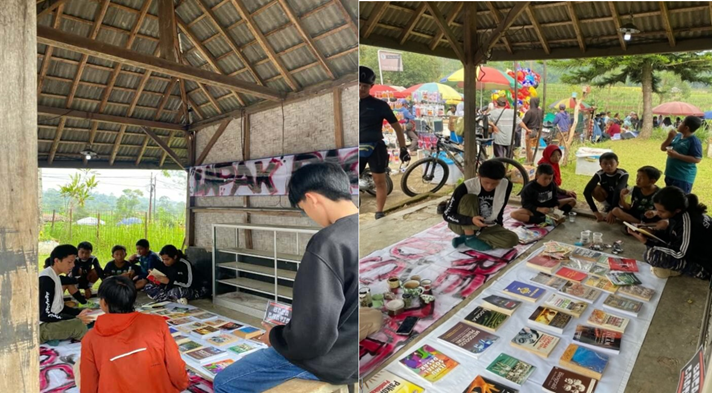
Figure
1
Ecological
literacy engagement through the melapak.
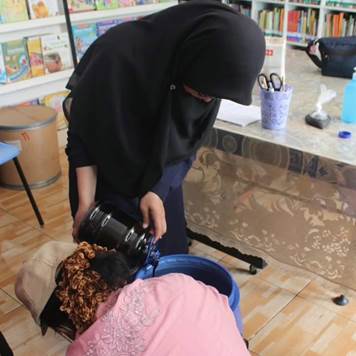
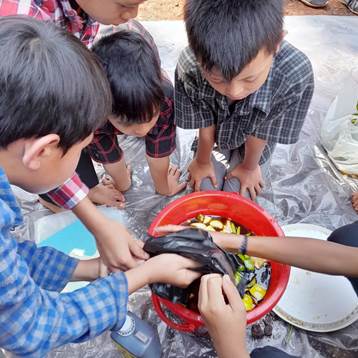
Figure
2
Hands-on learning about
organic waste management involving children and women from the village
community.
Challenges continue to
exist. Participation levels vary among activities, and the library encounters
limitations in staffing, restricted digital access, and the lack of a formal
system for monitoring learning outcomes. The August 2024 field report indicates
that the absence of systematic user preference data hinders the alignment of
collections with local knowledge needs, which is essential for maintaining
relevance.
An innovation that
transcends local boundaries is the distribution of 8,000 books to more than 100
community libraries in underserved areas, including Papua and the Karimunjawa Islands. This initiative, grounded in the
library's principles of knowledge equity and ecological justice, establishes Perpustakaan Alam Malabar as
both a local centre and a participant in broader green literacy networks. This
supports Fedorowicz-Kruszewska's (2022) concept of
libraries functioning as advocates for environmental issues.
Success indicators in this
domain encompass: 1) ongoing incorporation of collection-based learning within
community programs, evidenced by regular melapak
sessions and thematic reading circles; 2) intergenerational engagement
involving children and parents collaboratively accessing resources and
implementing concepts in everyday practices, such as composting and organic
gardening; and 3) extensive book distribution to marginalized areas, thereby
extending the library's influence beyond its immediate community.
Nonetheless, there are still
opportunities for enhancement. Future efforts should prioritize: a) the
expansion of digital access to environmental resources for remote users, b)
implementing data-driven collection development through systematic assessment
of user interests, c) linking collection usage to measurable learning outcomes
via evaluation frameworks, and d) improving community involvement in collection
curation to maintain the practicality and cultural relevance of resources.
Perpustakaan Alam Malabar enhances information access through participatory,
experience-based activities, fostering collective meaning-making and ecological
action, thereby solidifying its role in promoting long-term environmental
sustainability.
Catalysts of Program Success
The enduring success of
environmental literacy efforts at Perpustakaan Alam Malabar is grounded in three interconnected
factors: transformational leadership, volunteer involvement, and community
social capital. These elements combined constitute the institutional framework
that allows the library to operate as a community-oriented platform for
sustainability education. In accordance with Corrado
(2024) and Fedorowicz-Kruszewska (2022),
community-based literacy projects derive their efficacy from both formal
governance frameworks and informal networks of trust and collective
accountability that foster grassroots creativity.
Leadership at Perpustakaan Alam Malabar is most
prominently exemplified by Iman Sulaeman, the founder and chief facilitator. His
role extends beyond administrative duties—he serves as an educator, network
facilitator, and proponent of environmental literacy. His leadership style
prioritizes participative decision-making and relational trust over a top-down
approach. During an interview, he stated, “This place belongs to all of us; I
merely ensure that the community's ideas are represented here” (Interview 1,
November 2023). His endeavors encompass mentoring kids, developing inclusive
literacy initiatives, and cultivating external collaborations with NGOs and
colleges, all intended to maintain the library's significance and vibrancy.
Volunteerism represents the
second cornerstone of program effectiveness. Observational records and
interview data indicate that the library maintains 4–6 core volunteers at any
time, supplemented by intermittent contributions from students and visiting
interns, especially during significant events such as the Rawat Bumi Festival (Field Notes, July 2024). These volunteers
aid in ecological gardening, conduct melapak
sessions, and assist in organizing environmental workshops. Volunteer
engagement is variable but notably responsive during pivotal occasions,
highlighting the importance of adaptable, community-oriented labor frameworks
in maintaining rural literacy initiatives. Iman remarked, “Volunteers may not always be present, but they
arrive when it truly matters” (Interview 1, November 2023).
The third catalyst is
community social capital, firmly embedded in the traditions of gotong royong
(mutual aid) in Mekarsari Village. These cultural practices
establish a relational framework for executing ecopedagogical
tasks. The Rawat Bumi Festival serves as both an
environmental awareness initiative and a symbolic reaffirmation of local
identity, integrating ritual offerings with tree planting and storytelling
(Observation, May 2024). Shared gardens function as common areas where farmers,
moms, and children participate in co-learning, hence enhancing
intergenerational knowledge transmission (Jančius
& Gavenauskas, 2022). These modes of engagement
illustrate that ecological literacy flourishes when associated with communal
values and common environments.
Nonetheless, maintaining
these dynamics poses difficulties. Perpustakaan Alam Malabar continues to rely significantly on a central
leadership figure, lacks experienced personnel for program evaluation, and has
yet to implement rigorous result monitoring. Moreover, the library's heightened
exposure among external stakeholders, such as environmental activists and
university collaborators, has at times generated tension, with several locals
questioning the alignment of the library's programming with conventional
standards (Interview 5, July 2024). Despite being predominantly perceptual,
these problems highlight the necessity for culturally attuned communication and
inclusive governance frameworks to preserve local confidence.
Future measures for
enhancing institutional resilience should encompass:
·
development
of leadership capacity to diminish dependence on a singular individual;
·
structured
volunteer initiatives that offer training and acknowledgment;
·
community-centric
monitoring and evaluation frameworks that incorporate Indigenous knowledge; and
·
expanded
partnerships with religious, educational, and civil society organizations to
enhance legitimacy and cultural congruence.
Perpustakaan Alam Malabar illustrates that effective sustainability
teaching in rural settings relies not on sophisticated infrastructure, but on
the interpersonal connections fostered by inclusive leadership, active
volunteerism, and robust community ties. The library serves as a paradigm of
community-driven ecopedagogy, illustrating the
transformative potential of libraries in promoting socially integrated and
culturally responsive avenues to ecological literacy.
Challenges and Adaptive Strategies
The execution of
environmental literacy at Perpustakaan Alam Malabar is influenced by intricate problems arising
from internal institutional constraints and wider socio-cultural factors in Mekarsari Village. These problems highlight the
structural reality of maintaining community-based ecopedagogical
efforts in rural settings.
A significant concern is the
diminishing involvement of local residents, especially among children and
adolescents. Observational records indicate that weekly melapak
sessions, which drew 15–20 children in 2020, now average merely 8–10
participants per session (Field Notes, 2022–2024). Likewise, the Rawat Bumi Festival, which initially attracted over 100 community
members, recently garnered over 50 attendees (Event Reports, 2024). Interviews
indicate several contributing factors: increased academic demands, conflicting
economic priorities, and the rising impact of digital entertainment (Interview
3, December 2024). This loss dramatically contrasts with the library's
increasing exposure among external stakeholders—environmental activists, NGOs,
and university students—which, instead of enhancing local engagement, has
unwittingly intensified suspicions of outsider dominance. A villager remarked,
“It seems that the library is now more familiar to outsiders than to us”
(Interview 5, December 2024).
Institutional constraints
exacerbate these participation issues. The library functions with few
personnel, depending mostly on the founder for strategic planning, program
coordination, and networking (Observation, 2024). A lack of a systematic
mechanism for documenting program outcomes hinders the monitoring of
behavioural changes and the assessment of long-term program impact.
Furthermore, the absence of collaborations with local officials results in a
lack of institutional backing for the library, which might bolster its
legitimacy and facilitate resource mobilization.
Cultural dynamics offer an
extra degree of complication. The transfer of Perpustakaan
Alam Malabar to a more expansive and accessible
venue, designated as Perpustakaan Alam Malabar 2.0,
elicited apprehensions among certain people regarding the library's potential
introduction of unfamiliar values or external agendas. Despite the lack of
evidential support for these anxieties, they underscore the vulnerability of
trust when alterations transpire without comprehensive discourse (Interview 4,
December 2024).
Perpustakaan Alam Malabar has implemented adaptive tactics focused on cultural
responsiveness and participatory involvement to tackle these problems:
1. incorporating
local leaders and elders into program facilitation to ensure that environmental
messaging is congruent with community traditions and beliefs (Corrado, 2024)—Iman Sulaeman
stated, “We consistently endeavor to
create activities that foster a sense of ownership among individuals regarding
this space” (Interview 1, November 2023);
2.
enhancing
youth engagement via informal leadership training, internships, and volunteer
initiatives, hence facilitating intergenerational knowledge transfer (Jančius & Gavenauskas, 2022);
and
- utilizing
experiential and arts-based pedagogies, such as ecological storytelling
and creative workshops, to render environmental concepts tangible and
contextually significant (Observation, 2024).
This
report proposes five strategic initiatives to improve program sustainability,
building upon these efforts:
·
form
a cross-generational team of community literacy ambassadors to collaboratively
ensure program continuity;
·
create
participatory monitoring instruments to assess behavioural
and attitudinal shifts in ecological activities;
·
create
regionally pertinent educational material to enhance cultural congruence and
student involvement;
·
enhance
collaborations with educational institutions, religious organizations, and
environmental NGOs to establish comprehensive support networks; and
·
establish
an open-access digital platform for the documentation and dissemination of
exemplary activities in community-based environmental literacy.
Ultimately,
the experience of Perpustakaan Alam
Malabar illustrates that the durability of sustainability education relies more
on cultivating trust, cultural significance, and collective ownership than on
physical infrastructure. By mitigating structural vulnerabilities and utilizing
local social capital, rural libraries can function as significant catalysts for
ecological literacy and community empowerment.
Discussion
Building on these findings,
it is important to reflect on the broader implications for sustainability
education in rural libraries. To ensure resilience and long-term program
sustainability, this study recommends five strategic actions: (1) establishing
a cross-generational team of community literacy ambassadors; (2) developing
participatory tools to monitor behavioural and attitudinal change; (3) creating
locally relevant learning materials using arts and media; (4) expanding
partnerships with schools, faith-based organizations, and environmental NGOs;
and (5) building an open digital platform to document and share community-based
environmental literacy practices.
Overall, the experience of Perpustakaan Alam Malabar
demonstrates that the success of sustainability education is less about
infrastructure and more about building meaningful relationships. By staying
attentive to local context and fostering shared ownership, libraries can become
powerful agents of change, supporting inclusive, adaptive, and socially rooted
learning environments for environmental stewardship.
This study highlights the
essential role that rural community libraries, such as Perpustakaan Alam Malabar,
can play in advancing sustainability education. Rather than functioning solely
as information centres, these libraries act as inclusive and participatory
spaces where ecological learning is embedded in community practices. The
library’s initiatives reflect ecopedagogical
principles by integrating emotional engagement, critical thinking, and hands-on
activities that connect environmental literacy with everyday life. Programs
such as mobile reading sessions, community gardening, environmental film
screenings, and the Rawat Bumi Festival show how
literacy efforts can evolve into community-driven ecological practices that
span generations and social groups.
These findings reinforce the
notion that environmental literacy is not merely about transferring ecological
knowledge, but rather developing competencies that are culturally grounded and
socially relevant (Bissinger & Bogner, 2018;
Tomás et al., 2022). At Perpustakaan Alam Malabar, this is achieved by blending scientific
information with local wisdom, creating a space where knowledge is co-produced
through lived experience and shared cultural values.
Despite its achievements,
the library faces sustainability challenges. Local participation has decreased
over time, while interest from external visitors has grown. This shift raises
concerns about weakening community ownership. Corrado
(2024) refers to this dynamic as “participatory fragmentation,” where increased
external recognition may lead to diminished local engagement. These
developments highlight the importance of re-establishing trust and reinforcing
cultural alignment to ensure the library remains rooted in the needs of the
local population.
The study also finds that
social capital and leadership are vital in sustaining community-based
environmental programs. Youth volunteers and local leaders have become key
drivers of ongoing activities, reinforcing findings by Morris (2024), who
argues that green library initiatives thrive when community engagement is
strong and leadership is locally embedded. By empowering young people and
positioning them as literacy facilitators, the library fosters a sense of
shared ecological responsibility that is both generational and collaborative.
Importantly, the library
illustrates how ecopedagogy can be practised in
community settings, bridging knowledge, action, and reflection. As Bissinger & Bogner (2018) suggest, true environmental
literacy involves not only understanding environmental issues but also building
the skills and motivation to act. In this light, Perpustakaan Alam Malabar
functions not just as a place for learning but as a community hub for building
ecological resilience and collective agency.
Nevertheless, the absence of
formal policy support and collaboration with local government presents
limitations. Without integrated policies or institutional frameworks, it
remains difficult to scale or formalize environmental literacy programs.
Strengthening partnerships with schools, policymakers, and other knowledge
institutions could help expand the reach and impact of such initiatives and
ensure their long-term viability. Additionally, this study recognizes
methodological constraints, particularly the lack of comprehensive quantitative
data on program outcomes, including long-term behavioural impacts of ecological
literacy initiatives. While participation records from event reports offered
useful approximations, inconsistencies in documentation and variations in
reporting formats posed challenges. To address these gaps, triangulation was
employed through cross-verification with observations and interview narratives.
Furthermore, decreased participation among local residents may reflect broader
socio-cultural and economic dynamics beyond the scope of this case. Future
research should incorporate systematic pre- and post-program assessments, as
well as longitudinal studies, to more rigorously evaluate behavioural and
attitudinal changes resulting from library interventions.
Implications for Evidence Based Practice in Academic Libraries
The
findings of this study offer more than a compelling story; they provide a
foundation of practice-based evidence for library professionals, particularly
in academic settings. The evidence generated from this case study demonstrates
that successful, community-driven sustainability education is underpinned by
several key factors: relational leadership, the activation of social capital
through stakeholder engagement, and adaptive programming that is culturally
responsive and prioritizes hands-on participation. Narratives and experiences
from such initiatives serve as strong contextual evidence, highlighting how
libraries can demonstrate their value beyond traditional metrics (Lewis, 2016).
This evidence can be directly translated into actionable strategies for
academic libraries aiming to deepen their role in sustainability education.
For
academic library practitioners, this model offers a practical roadmap for
moving from theory to action. The evidence can be used in several concrete
ways:
·
Advocacy
& Funding: Practitioners can use this evidence to propose pilot projects
with compelling arguments. The case demonstrates that high-impact community
engagement does not necessarily require large initial investments in
infrastructure or collections, but can be effectively built on a low-cost,
high-touch model focused on participation and social capital. This provides a
strong justification for securing seed funding for innovative,
engagement-focused initiatives.
·
Program
Design: Rather than starting with a large budget for sustainability-themed
books, the evidence suggests that academic libraries should prioritize
participatory activities to build community and momentum first. This could
include creating a campus community garden, launching a "sustainability
ideas" festival, or partnering with an existing Earth Day event on campus.
These activities create a foundation of engagement upon which collection
development and other services can be subsequently built.
·
Partnerships:
The evidence informs a strategic approach to collaboration. Academic libraries
should look beyond traditional departmental partnerships and actively engage
with non-traditional units on campus, such as the university's sustainability
office, student environmental clubs, and community-engaged learning centres. This approach mirrors the social capital model
observed in the case study, leveraging diverse networks to achieve shared goals
and embed the library more deeply into the campus ecosystem.
In
summary, Perpustakaan Alam
Malabar offers a practical example of how community libraries can serve as
active contributors to sustainability education. Through locally relevant,
inclusive, and evidence based approaches, the library
has become a platform for both learning and transformation. Its model provides
valuable insights for other rural contexts, especially those seeking to balance
environmental awareness with cultural relevance and community engagement.
Conclusion
This study highlights the
critical role that rural community libraries can play in advancing
sustainability education by fostering environmental literacy that is
participatory, locally relevant, and culturally responsive. Perpustakaan Alam Malabar
shows that libraries can move beyond their traditional functions and become
active agents of socio-environmental change. Through ecopedagogical
approaches, community involvement, and localized media use, the library
presents a practical model that connects knowledge with ecological action.
By placing community
engagement at the centre of its activities, the library has become a shared
space for developing environmental awareness and civic responsibility. The
philosophy of “reading is planting” symbolizes this connection, turning
literacy into a tool for local empowerment. These findings support previous
research (Bissinger & Bogner, 2018; Tomás et al.,
2022), which emphasizes that effective environmental literacy must address
emotional and behavioural engagement, not just information delivery. Despite
its success, the model faces real challenges. A decline in local participation,
growing dependence on external audiences, and limited policy integration have
weakened its sustainability. These trends reflect what Corrado
(2024) calls “cultural dislocation,” where wider recognition can
unintentionally distance an initiative from its community roots. The absence of
formal support from education systems further limits replication.
To respond, the library has
adopted adaptive strategies such as training local literacy ambassadors,
forming cross-sector partnerships, and using public spaces as learning
environments. These efforts align with literature emphasizing the value of
social capital and institutional collaboration (Jančius
& Gavenauskas, 2022; Morris, 2024). Overall, this
study contributes both empirically and conceptually to the understanding of how
libraries can support grassroots sustainability education. Ultimately, this
study offers a scalable, context-sensitive model and contributes a rich
qualitative case to the EBLIP knowledge base, demonstrating how robust evidence
from grassroots practice can inform and inspire transformative sustainability
education in libraries worldwide.
Author Contributions
Rully Khairul
Anwar:
Conceptualization (lead), Methodology (lead), Supervision (lead), Project
administration (lead), Funding acquisition (lead), Writing – review &
editing (equal) Diah Sri Rejeki: Investigation (lead), Data curation (lead),
Writing – original draft (lead), Writing – review & editing (equal) Aminudin: Investigation (supporting),
Visualization (lead), Writing – review & editing (equal) Rinda Aunillah:
Investigation (supporting), Formal analysis (lead), Visualization (supporting),
Writing – review & editing (equal) Ibrahim Adi Surya: Methodology
(supporting), Formal analysis (supporting), Writing – review & editing
(equal) Merryam Agustine:
Investigation (supporting), Data curation (supporting), Writing – review &
editing (equal)
Acknowledgements
The authors
extend heartfelt thanks to the residents of Mekarsari
Village and the dedicated team at Perpustakaan Alam Malabar for their generous cooperation and
enthusiastic participation throughout this study. Deep appreciation is also
directed to Iman Sulaeman, whose visionary leadership
and commitment to community-based environmental education were a central
inspiration for this research. The authors also acknowledge the invaluable
support of the research assistants, community facilitators, and academic colleagues
at the Faculty of Communication Sciences, Universitas Padjadjaran,
and the Faculty of Social and Political Sciences, Widyatama
University, for their feedback and technical assistance. This research was
funded by the Ministry of Research, Technology, and Higher Education of the
Republic of Indonesia (Kementerian Ristek-Dikti)
through the Fundamental Research Grant Scheme (Riset
Fundamental) for the 2025 fiscal year. The authors gratefully acknowledge this
support, which made the fieldwork, analysis, and dissemination of these
findings possible.
References
Alwi, M., Kudsiah, M., Hakim, A. R., Burhanuddin, B., & Maritasari, D. B. (2022). Penguatan
literasi lingkungan melalui kegiatan Hidroponik untuk membangun Green School di SDU Hamzanwadi.
ABSYARA: Jurnal Pengabdian Pada Masyarakat, 3(2), 243–254. https://doi.org/10.29408/ab.v3i2.5945
Antonelli, M.
(2008). The Green Library Movement: An overview and beyond. Electronic Green
Journal, 1(27). https://doi.org/10.5070/G312710757
Bissinger, K.,
& Bogner, F. X. (2018). Environmental literacy in practice: Education on
tropical rainforests and climate change. Environment, Development and
Sustainability, 20(5), 2079–2094. https://doi.org/10.1007/s10668-017-9978-9
Corrado, E.
M. (2024). Environmental sustainability and libraries. Technical Services
Quarterly, 41(3), 265–274. https://doi.org/10.1080/07317131.2024.2357015
Das, R. K.,
& Singha, A. (2023). Greening knowledge: Exploring the intersection of
environmental sustainability and academic libraries in the 21st century. International
Journal of Science and Research, 12(12), 1603–1607. https://doi.org/10.21275/SR231220210107
Devine, J.,
& Appleton, L. (2023). Environmental education in public libraries. Library
Management, 44(1–2), 152–165. https://doi.org/10.1108/LM-10-2022-0091
Dissanayake, D.
M. S. B. (2024). Connecting the dots; Environmental literacy index in measuring
knowledge for environmental conservation. Proceedings of the 27th
International Forestry and Environment Symposium, 27, 155. https://doi.org/10.31357/fesympo.v27.7189
Fang, W.-T., Hassan, A., & LePage, B. A. (2023). The
living environmental education: Sound science toward a cleaner, safer, and
healthier future. Springer. https://doi.org/10.1007/978-981-19-4234-1
Fedorowicz-Kruszewska, M.
(2022). Green library as a subject of research – a quantitative and qualitative
perspective. Journal of Documentation, 78(4), 912–932. https://doi.org/10.1108/JD-08-2021-0156
Given, L. M.
(2007). Evidence-based practice and qualitative research: A primer for library
and information professionals. Evidence Based Library and Information Practice,
2(1), 15–22. https://doi.org/10.18438/B8QC7Q
Ikhsan, F.
A., Kurnianto, F. A., Apriyanto,
B., & Nurdin, E. A., & Bachtiar,
R. W. (2019). The effectivity of environmental education in scaffolding
students’ ecological literacy. Jurnal
Pendidikan IPA Indonesia, 8(3), 398–406. https://doi.org/10.15294/jpii.v8i3.14522
Islam, M. A.,
Sultana, R., & Widén, G. (2024). Ascertaining the
place of UN Sustainable Development Goals in public libraries: How much
progress have public libraries made in Bangladesh? Global Knowledge, Memory
and Communication, 73(3), 354–374. https://doi.org/10.1108/GKMC-03-2022-0072
Jackson, L.
(2022). Libraries and sustainability: Programs and practices for community
impact. René Tanner, Adrian K. Ho, Monika Antonelli, and Rebekkah
Smith Aldrich, eds. Chicago, IL: ALA Editions, 2021. 176p. Paper, $49.99
(ISBN: 9780838937945). College & Research Libraries, 83(5),
860–862. https://doi.org/10.5860/crl.83.5.860
Jančius, R.,
& Gavenauskas, A. (2022). The influence of values
and social environment on parents’ environmental attitudes: Lithuanian case
study. Sustainability, 14(20), 13415. https://doi.org/10.3390/su142013415
Khalid, A.,
& Batool, S. H. (2020). A qualitative case study of green environment:
Practices, attitudes and future strategies of Pakistani university librarians. Electronic
Green Journal, 1(44). https://doi.org/10.5070/G314443701
Koufogiannakis, D.
(2011). Considering the place of practice-based evidence within Evidence Based
Library and Information Practice (EBLIP). Library and Information Research,
35(111), 41–58. https://doi.org/10.29173/lirg486
Koufogiannakis, D.
(2012). Academic librarians’ conception and use of evidence sources in
practice. Evidence Based Library and Information Practice, 7(4),
5–24. https://doi.org/10.18438/B8JC8J
Lewis, S.
(2016). Reflections on using patrons’ stories as practice-based evidence. Evidence
Based Library and Information Practice, 11(1), 107–110. https://doi.org/10.18438/B87K8T
Mathiasson, M.
H., & Jochumsen, H. (2022). Libraries,
sustainability and sustainable development: A review of the research
literature. Journal of Documentation, 78(6), 1278–1304. https://doi.org/10.1108/JD-11-2021-0226
Meydan, C. H.,
& Akkaş, H. (2024). The role of triangulation in
qualitative research: Converging perspectives. In A. Elhami,
A. Roshan, & H. Chandan (Eds.), Principles of conducting
qualitative research in multicultural settings (pp. 101–132). IGI Global
Scientific Publishing. https://doi.org/10.4018/979-8-3693-3306-8.ch006
Miles, M. B., Huberman, A. M., & Saldaña, J. (2020). Qualitative
data analysis: A methods sourcebook (4th ed.). SAGE
Publications.
Morris, Y.
(2024). The green libraries partnership and green libraries campaign. Business
Information Review, 41(4), 195–199. https://doi.org/10.1177/02663821241298617
Mwanzu, A.,
Bosire-Ogechi, E., & Odero,
D. (2023). Green initiatives towards environmental sustainability: Insights
from libraries in Kenya. IFLA Journal, 49(2), 298–314. https://doi.org/10.1177/03400352221135012
Noble, H., &
Heale, R. (2019). Triangulation in research, with
examples. Evidence-Based Nursing, 22(3), 67–68. https://doi.org/10.1136/ebnurs-2019-103145
Putra, D. D.
(2025). Exploring green libraries innovation toward environmental
sustainability in Indonesia: A systematic literature review. IOP Conference
Series: Earth and Environmental Science, 1439(1), 012023. https://doi.org/10.1088/1755-1315/1439/1/012023
Robles-Piñeros, J., & Tateo, L.
(2023). Isn’t all about trash... Children’s conceptions about ecology and their
implications for biology education in Colombia. Journal of Biological
Education, 57(3), 692–705. https://doi.org/10.1080/00219266.2021.1941189
Roth, C. E.
(1968). Curriculum overview for developing environmentally literate citizens
(ED032982). ERIC. https://files.eric.ed.gov/fulltext/ED032982.pdf
Saini, A.
(2025). Climate Action Framework for Libraries: Empowering response to climate
crisis. IFLA Journal, 51(2), 203–216. https://doi.org/10.1177/03400352241302503
Tomás, M. R. V.,
Vicente, J. S. Y., De La Cruz, M. D. B., & Acha,
D. M. H. (2022). Environmental literacy and its impact on sustainable
pedagogical behaviors of basic education teachers, Lima-Peru. WSEAS
Transactions on Environment and Development, 18, 856–864. https://doi.org/10.37394/232015.2022.18.80
Yunus, N.,
& Ismail, M. N. (2024). Sustainable libraries: Harnessing smart library for
a green future. Journal of Tourism, Hospitality and Environment Management,
9(35), 136–144. https://gaexcellence.com/jthem/article/view/2562
Appendix
Research
Participant Consent Form
To: Activators, Volunteers, and Community Members of the
Malabar Nature Library
From: Rully Khairul Anwar, Diah Sri Rejeki, Aminudin, Rinda Aunillah, Ibrahim Adi Surya, Merryam
Agustine (The Research Team)
Study Title: "Informing Sustainability Education in Academic
Libraries through Community Engagement: Evidence from a Rural Green Library in
Indonesia"
Dear Sir/Madam,
As part of this research, we
aim to study and document how the Perpustakaan
Alam Malabar (Malabar Nature Library) contributes
to sustainability education and environmental literacy within the Mekarsari Village community. The findings of
this study are expected to provide evidence and a practical model for other
library managers—at both community and academic levels—to develop similar
programs rooted in local wisdom and community needs.
Therefore, we request your
consent and cooperation to participate in this study. Your participation may
involve:
- A semi-structured interview
lasting approximately 30 to 45 minutes to share your experiences and views
on the library's programs.
- Participant observation,
where researchers will join and observe regular library activities, such
as melapak (outdoor reading), ecological
gardening, environmental film screenings, and the annual Rawat Bumi (Earth Care) Festival.
- Visual documentation
(photographs) during activities to supplement the research data.
All information
and data we collect during this research will be kept confidential and used
only for the purpose of this study. Your name will be anonymized in the final
report to protect your privacy. Participation in this study is voluntary, and
you have the right to withdraw at any time without any consequences.
If you are
willing to participate in this study, please sign the form below.
Thank you for
your attention and cooperation.
Sincerely,
The Research
Team
As
the founder of Perpustakaan Alam Malabar (Malabar Nature Library), I hereby consent
to participate in the research study described above.
I
also give permission for my/my child's photograph (where individuals are not
personally identifiable) to be used for the purposes of this research report.
Participant's
Signature: